


⚡ Quick Answer — HYROX Recovery
The most effective HYROX recovery routine combines rehydration and light carbs within 30 minutes of finishing, a protein-focused meal within 2 hours, gentle movement the next day instead of total rest, and prioritizing sleep over ice baths or expensive recovery gadgets. Most of what actually speeds up HYROX recovery is unglamorous and free.
Crossing the HYROX finish line feels incredible — until the next morning, when your legs remind you exactly how many sled pushes you did. HYROX recovery is often treated as an afterthought, but what you do in the 48 hours after your race has a real impact on how fast you bounce back and how ready you are for your next training block.
We looked at HYROX recovery routines described by dozens of Pro and Open athletes across multiple race weekends to pull together what actually works, versus what’s just recovery-industry marketing.
This HYROX recovery guide covers what to do in the first 30 minutes after finishing, how to handle the soreness that hits hardest after HYROX specifically, and the recovery mistakes that slow athletes down without them realizing it.
Before you get into recovery mode, it’s worth setting up for your next race too — get a free HYTRACK ticket alert so you’re first in line when your next city’s tickets go on sale.
 ×
×

The first real space for HYROX athletes — race talk, training tips, finding a doubles partner. Free, and growing.
Join on Telegram → Free to join · No app requiredWhy HYROX Recovery Is Different From a Normal Workout
HYROX recovery hits differently than recovering from a single hard gym session, because the race combines two types of fatigue at once: the metabolic exhaustion of 8 kilometers of running, and the localized muscular damage from eight functional stations under fatigue. Your legs are dealing with running-specific soreness on top of sled-push quads, wall-ball shoulders, and farmers-carry grip fatigue — all at the same time.
That combination is exactly why generic “rest day” advice doesn’t fully apply to HYROX recovery. It needs to address both systems: getting your cardiovascular system back to baseline, and giving your muscles time to repair from genuinely unusual loading patterns like sled pulling and burpee broad jumps.
The First 30 Minutes After You Cross the Finish Line
What you do immediately after finishing sets the tone for the rest of your HYROX recovery. Your body is primed to absorb fluids and nutrients faster in this window than at almost any other point, which makes it worth prioritizing even when all you want to do is sit down.
Start with fluids and a small amount of easily digestible carbohydrate — even something simple like a banana or a sports drink helps begin replenishing what you burned through 8 rounds of running and stations. Keep moving gently rather than immediately collapsing onto the floor; a slow walk around the venue helps your body start clearing metabolic waste instead of letting it pool in your legs, and gives your HYROX recovery a genuine head start.
Many HYROX venues have aid stations near the finish line with water and light snacks — use them. It’s a small habit that adds up over the following 24 hours of your HYROX recovery.
Rehydration and Electrolytes: What Your Body Actually Lost
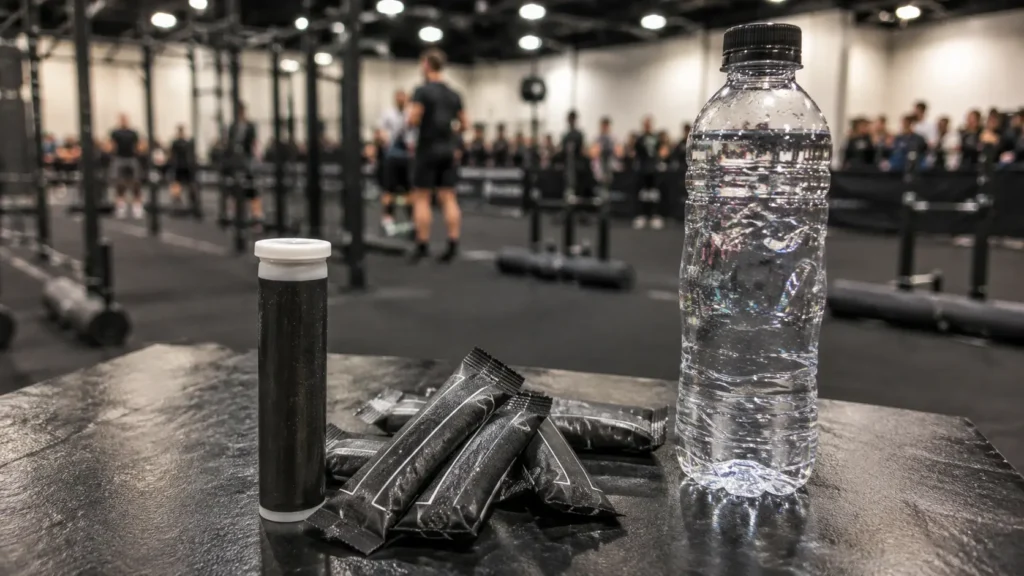
A HYROX race under warm venue lighting and sustained effort can lead to significant fluid and sodium loss through sweat, especially during the sled work and farmers carry, where grip fatigue often correlates with cramping later in the race. Plain water alone doesn’t always replace what you’ve lost — electrolytes, particularly sodium, matter just as much as fluid volume for effective HYROX recovery.
If cramping was an issue during your race, that’s a signal worth paying attention to for your next event too. Our complete guide to HYROX electrolytes and stopping cramps breaks down exactly how to structure your intake before, during, and after race day.
Post-Race Nutrition: What to Eat in the First 2 Hours
Within the first two hours after finishing, aim for a proper meal that combines protein and carbohydrates — protein to support the muscle repair your body needs after the eccentric loading from lunges and burpees, and carbohydrates to refill glycogen stores depleted by the running and station work. This step alone makes a noticeable difference in how your HYROX recovery feels the next morning.
You don’t need anything exotic here. A simple meal with a lean protein source, some rice or potatoes, and vegetables covers the fundamentals. If you’re not hungry immediately after racing, that’s normal — a small snack now followed by a fuller meal within a couple of hours works just as well for your HYROX recovery.
If you’re already thinking ahead to your next race, our race day nutrition plan covers the other side of this — what to eat before HYROX so you’re not starting the recovery process already depleted.
Managing DOMS: Sled Legs, Wall Ball Shoulders, and Grip Fatigue
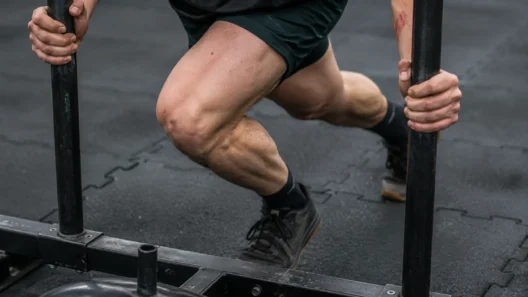
Delayed onset muscle soreness, or DOMS, typically peaks 24 to 48 hours after HYROX rather than immediately — which is why day two of HYROX recovery is usually harder than the day right after the race. The sled push and pull tend to hit the quads and glutes hardest, wall balls leave shoulders and thighs sore, and farmers carries often leave forearms and grip strength noticeably fatigued for days.
Gentle movement is one of the most effective tools for managing this soreness — light walking, easy cycling, or a slow swim can help reduce stiffness more than sitting completely still. Static stretching after the initial 24 hours, once the sharpest soreness has passed, can also help restore range of motion, particularly in the hips and shoulders, and speed up your overall HYROX recovery.
Sharp, localized pain is different from general soreness. If something feels like an injury rather than fatigue — especially in a joint — it’s worth getting it checked by a physiotherapist or doctor rather than pushing through it.
Active Recovery vs Total Rest: What Works Best

Complete rest feels intuitive after a hard race, but most evidence and athlete experience points toward active recovery being more effective for HYROX recovery specifically. Low-intensity movement — walking, easy cycling, a light swim, or gentle mobility work — increases blood flow to sore muscles without adding meaningful additional fatigue.
That doesn’t mean training hard the day after your race. Effective HYROX recovery means choosing movement over stillness, at an intensity where you could hold a conversation the entire time.
| Recovery Method | When to Use It | Worth Prioritizing? |
|---|---|---|
| Rehydration + electrolytes | Immediately after finishing | Yes |
| Protein + carb meal | Within 2 hours | Yes |
| Sleep | Night of the race onward | Yes |
| Light active recovery | Day 1–2 after racing | Yes |
| Ice baths / cryotherapy | Optional, personal preference | Nice-to-have |
| Compression gear | During travel or long sitting | Nice-to-have |
Sleep and HYROX Recovery: Why the First Night Matters Most
Sleep is arguably the single most underrated tool in HYROX recovery, and it’s completely free. Most of the physical repair work — muscle protein synthesis, hormonal recovery, and central nervous system reset — happens during deep sleep, not during any recovery gadget or ice bath.
Race weekends often disrupt sleep through travel, adrenaline, and late nights celebrating with your team — all understandable, but worth being intentional about. Prioritizing a full night’s sleep the evening after your race, even if celebrations run late, meaningfully speeds up your HYROX recovery by day three.
Ice Baths, Compression, and Recovery Tools: What’s Worth It
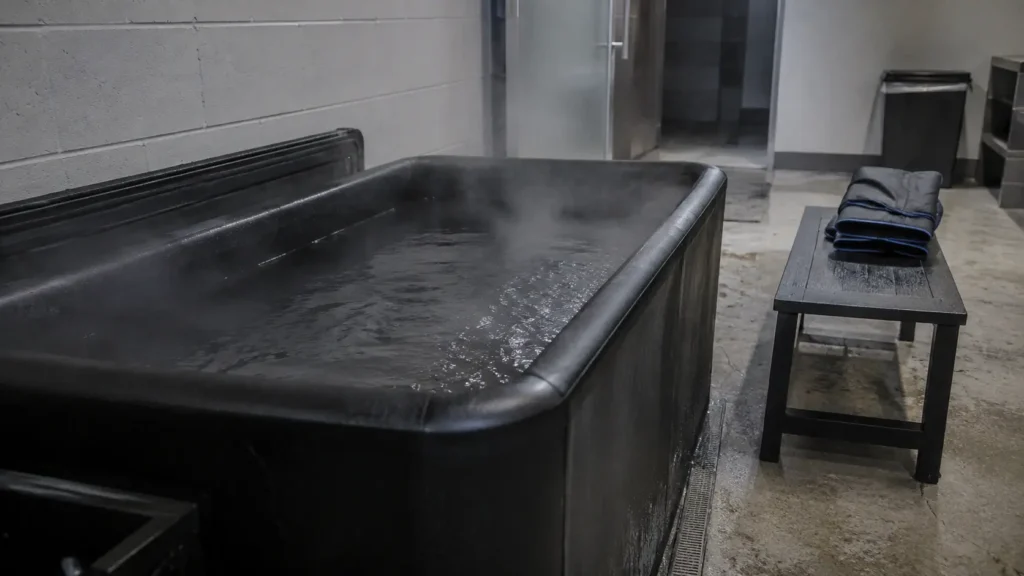
Ice baths and cold exposure have become closely associated with fitness racing culture, but the evidence on how much they actually speed up muscle repair during HYROX recovery is mixed — some research suggests cold exposure immediately after strength-focused training may even blunt some adaptation benefits, though this matters less in the context of a single race recovery period.
If cold exposure genuinely makes you feel better and helps you move more the next day, there’s no strong reason to avoid it. But it shouldn’t replace the fundamentals of HYROX recovery — hydration, nutrition, sleep, and gentle movement do more of the actual work than any single tool.
Compression gear is a similar story: genuinely useful for comfort during travel home or long periods of sitting after a race, and many athletes report feeling less swollen and stiff wearing it during their HYROX recovery window. If you’re curious whether it’s worth adding to your kit bag, our compression leg sleeve guide covers what the gear actually does and doesn’t do.
Common HYROX Recovery Mistakes to Avoid
The most common HYROX recovery mistake is treating it as passive — sitting completely still for 24 hours and expecting soreness to simply resolve on its own. A close second is under-fueling after the race, either from post-race adrenaline suppressing appetite or from trying to “make up for” pre-race carb loading by eating less afterward, which only slows recovery down.
Skipping hydration because the race is over is another common error — dehydration effects often show up the next day as headaches and unusually severe fatigue, easily mistaken for normal DOMS. And jumping straight back into hard training within 48 hours, before your HYROX recovery has genuinely settled, is one of the fastest ways to turn a manageable process into a much longer one.
This guide covers general HYROX recovery wellness practices and is not medical advice. If you’re dealing with persistent pain, an injury, or unusual symptoms after racing, consult a doctor or physiotherapist rather than relying on general guidance.
Quick Action Plan
- Rehydrate with fluids and electrolytes within the first 30 minutes after finishing.
- Eat a protein and carb-focused meal within 2 hours of racing.
- Keep moving gently instead of sitting completely still right after the race.
- Prioritize sleep the night of your race, even if celebrations run late.
- Choose light active recovery over total rest for the following 1-2 days.
- Watch for sharp or localized pain that could signal an injury rather than normal soreness.
- Ease back into hard training only once your HYROX recovery has genuinely settled.
FAQ
How long does HYROX recovery take?
Most athletes feel largely recovered within 3 to 5 days, though DOMS typically peaks around day two. Full readiness for hard training again usually takes closer to a week.
Should I stretch right after finishing HYROX?
Gentle movement is more useful immediately after finishing than static stretching. Save deeper stretching for the following day of your HYROX recovery, once the sharpest fatigue has passed.
Are ice baths worth it for HYROX recovery?
They can help some athletes feel better and move more comfortably the next day, but the evidence for accelerated muscle repair is mixed. They’re a nice-to-have, not a replacement for hydration, nutrition, and sleep.
Why are my legs sorer after HYROX than after a normal leg day?
HYROX combines running-specific fatigue with unusual loading patterns like sled pushing, sled pulling, and lunges under pre-fatigue — a combination your body rarely experiences in a normal gym session, which often leads to a more demanding HYROX recovery than expected.
When can I start training again after a HYROX race?
Light active recovery is fine within a day or two. Most athletes wait 3 to 5 days before returning to genuinely hard training, depending on how they feel and how intense the race was.
This article covers general wellness practices and is not a substitute for medical advice.
Training tips & HYROX insights
Join the list — guides, race strategies and performance content, straight to your inbox.