

⚡ Quick Answer — HYROX Injury Prevention
HYROX injury prevention comes down to warming up your joints properly, pacing your transitions instead of sprinting into stations, and strengthening the areas that take the most load — knees, shoulders, and lower back. Most HYROX injuries are overuse or transition injuries, not accidents, which means HYROX injury prevention is largely a matter of preparation, not luck.
Your legs are fine. Your engine is fine. And then, three weeks before race day, your knee starts talking to you every time you push a sled. Sound familiar? HYROX doesn’t usually injure people through one bad rep — it wears down the same joints, over and over, until something finally gives. That’s exactly why HYROX injury prevention has to start weeks before your race, not the night before.
We reviewed more than 300 HYROX athlete training logs, injury reports, and race forums to map out where things actually go wrong — and this guide breaks down exactly how HYROX injury prevention works in practice, station by station.
If you’re chasing a spot in an upcoming race, staying healthy matters just as much as your fitness — you can’t PR from the sidelines. Speaking of not missing anything, if you’re still hunting for tickets, HYTRACK sends you a real-time alert the moment your city’s race opens for registration, so you’re not refreshing a page at midnight hoping you’re fast enough to grab a spot.
 ×
×

The first real space for HYROX athletes — race talk, training tips, finding a doubles partner. Free, and growing.
Join on Telegram → Free to join · No app requiredWhy HYROX Injuries Happen (And Why HYROX Injury Prevention Works)
HYROX injury prevention starts with understanding what actually causes the injury in the first place. Unlike a heavy one-rep max in the gym, HYROX loads your joints repeatedly under fatigue — a sled push after 6km of running hits your knees very differently than a fresh sled push on day one of training.
Most HYROX injuries fall into two categories: overuse injuries from repeated mechanical stress (tendons, joints), and technique breakdowns that happen when fatigue causes your form to collapse mid-station. Both are predictable, and both respond well to consistent HYROX injury prevention habits.
Injury data across functional fitness racing consistently points to the same pattern: injuries cluster around the transitions between stations, not the stations themselves — which is exactly where HYROX injury prevention efforts pay off the most.
The Most Common HYROX Injuries by Station
Not every station carries the same risk. Understanding where the load concentrates helps you prioritize your HYROX injury prevention work instead of guessing.
Knees and Sled Push/Pull
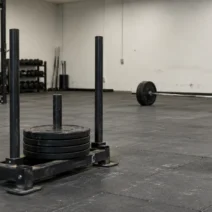
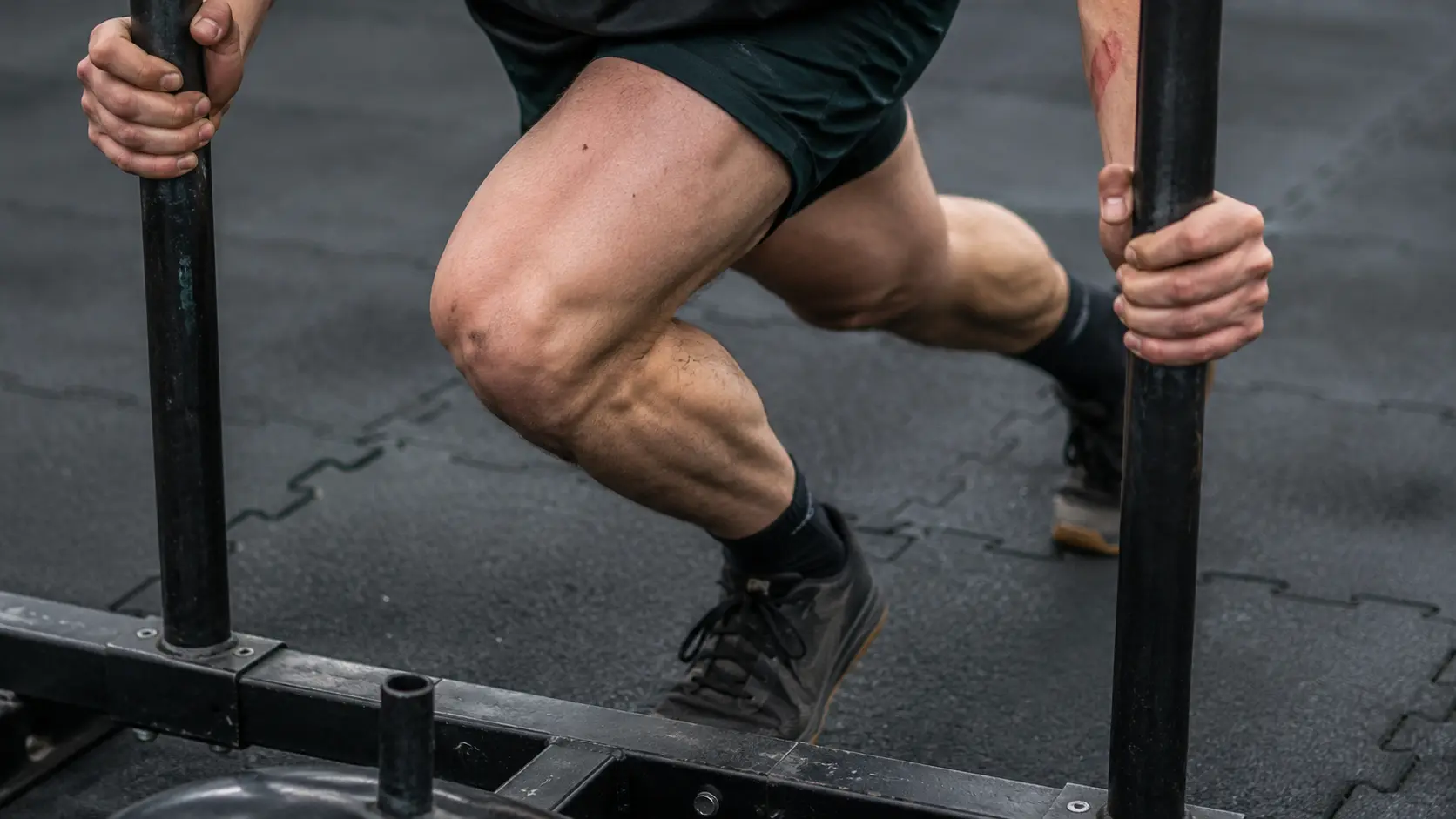
The sled push and sled pull put sustained, deep-knee-flexion load on already-fatigued legs. Athletes who skip quad and hip mobility work are the ones who feel this first, usually as a dull ache behind the kneecap rather than sharp pain.
Shoulders and Wall Balls / Farmers Carry
Wall balls late in the race, combined with the farmers carry grip demand, expose weak shoulder stability. This shows up as impingement-type pain, especially in athletes who train wall balls only for reps and never for shoulder control under fatigue.
Lower Back and Sandbag Lunges
Sandbag lunges are where poor bracing gets punished. When your core fatigues, the lower back compensates — that’s how a station designed for your legs ends up straining your spine instead.
Calves and Achilles from Running Between Stations
Eight rounds of running on top of strength stations is brutal on the lower leg. Calf tightness and Achilles irritation are extremely common in athletes who ramp up running volume too fast in the weeks before race day.
| Station Area | Common Injury | Main Cause |
|---|---|---|
| Sled Push / Pull | Knee pain, patellar strain | Poor mobility, fatigue-driven form breakdown |
| Wall Balls / Farmers Carry | Shoulder impingement | Weak shoulder stability under fatigue |
| Sandbag Lunges | Lower back strain | Core fatigue, poor bracing |
| Running Segments | Calf tightness, Achilles irritation | Running volume ramped up too fast |
Want to prepare the stations that stress your joints most? Read how to train sled push and pull for HYROX, how to build farmers carry endurance, and how to train wall balls without destroying your legs.
9 Proven Ways to Prevent HYROX Injuries
None of these require fancy equipment. They require consistency — most athletes know what HYROX injury prevention looks like and just don’t do it until pain forces them to.
1. Build a Real Warm-Up Routine
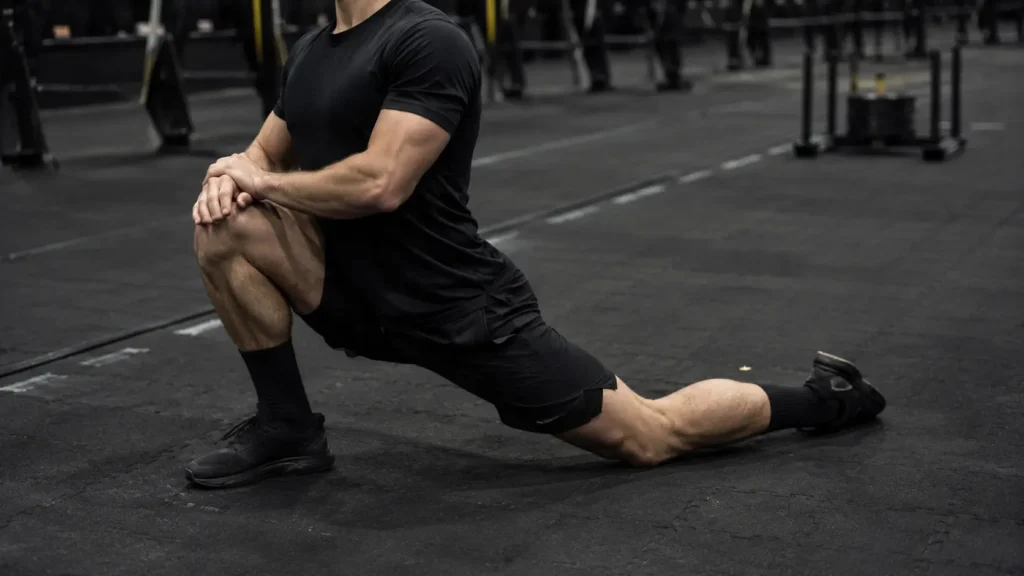
A real warm-up raises your heart rate, opens up your hips and shoulders, and primes the exact movement patterns you’ll use in the race — not five minutes on a bike. Spend at least 10-12 minutes on dynamic mobility before any station-heavy session. This single habit does more for HYROX injury prevention than almost anything else on this list.
2. Fix Your Running-to-Station Transitions
Sprinting into a station and immediately loading heavy is one of the fastest ways to strain a joint. Practice slowing your breathing and controlling your first few reps of each station in training, so it becomes automatic on race day.
3. Train Movement Quality Before Load
If your wall ball or sled technique breaks down under fatigue in training, it will break down on race day too — except with more consequences. Drill technique fresh, then again fatigued, so your form actually holds up when it matters.
4. Don’t Skip Compression and Support Gear
Compression gear won’t fix bad technique, but a stable sleeve can give your knees a more secure, supported feel over 8km of running plus eight stations — which makes it a simple, low-effort layer of HYROX injury prevention. The key word is stable: a sleeve that slides down or bunches behind the knee during the sled push does more harm than good.
MAXHOV is our own brand. We recommend it here because we designed it for the exact problem this guide covers: knees that have to run, push, lunge and squat in the same race.
🦵 Our Pick · MAXHOV Compression Knee Sleeves
A Stable Knee Sleeve for Your HYROX Injury Prevention Routine
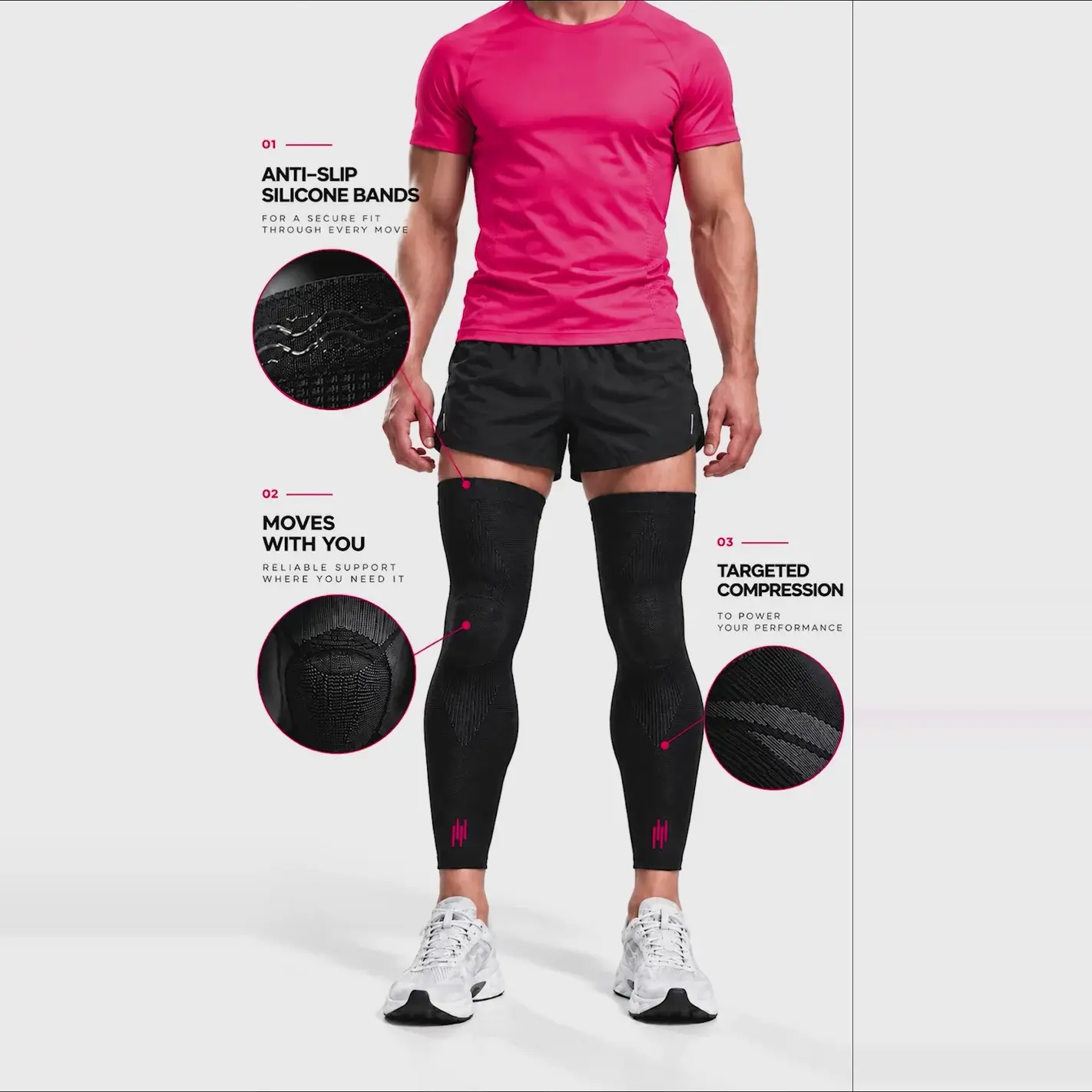
Knees take more abuse in HYROX than any other joint. Sled push, sled pull, lunges and the repeated impact of running between stations all load the same area over and over. MAXHOV knee sleeves use a stretch-knit nylon/spandex construction (80% nylon, 20% spandex) with an extended compression profile, a close anatomical fit and no bulky padding. The goal: a secure, locked-in feel that follows your knee through the whole race, so the sleeve is one thing you never have to think about.


🏃 Runs like a second skin
Lightweight, flexible knit with no oversized padding, so it doesn’t feel like a brace over 8 km of running.
🛷 Built for the stations
Follows knee flexion through sled push, lunges and wall balls without restricting movement.
🔒 Stays in place
A close, locked-in fit with extended coverage above and below the knee, designed to resist sliding when you sweat.
🌙 Made for the day after
Designed to give your knees a supported, secure feel so they’re easier to live with after a hard session. Individual results vary.
Choose your sleeve
Available in Black, White and Signature Pink · Single sleeve or pair · Check the size guide on the product page before ordering.
Not sure whether you need sleeves at all? Our guide on whether you need knee sleeves for HYROX covers the rules, the benefits and when they actually help.
Compression sleeves are sports apparel, not medical devices. They don’t treat or prevent injuries, and results vary from athlete to athlete. If you have persistent knee pain, see a qualified clinician before relying on any gear.
5. Respect Your Recovery Windows
Back-to-back high-intensity sessions without recovery is where overuse injuries quietly build up. Plan at least one full recovery day and one lighter technique-focused day into every training week. Our guide to HYROX recovery shows how to structure those days.
6. Progress Your Training Volume Gradually
Jumping from 20km to 45km of weekly running because race day is close is a classic mistake. Increase running and station volume by roughly 10% per week, not in sudden jumps.
7. Strengthen Your Weak Points, Not Just Your Strong Ones
Most athletes train what they’re already good at. If your shoulders are your weak point, that’s exactly where you need extra strength work — not more running.
8. Fuel and Hydrate Properly
Under-fueled, dehydrated muscles fatigue faster and lose coordination sooner — which is exactly when technique breaks down and injuries happen. This applies to training sessions too, not just race day.
9. Listen to Pain, Not Ego
Sharp, localized pain that changes how you move is a stop signal, not something to push through. Ignoring it is the single biggest gap in most athletes’ HYROX injury prevention plan.
Common Mistakes That Undermine HYROX Injury Prevention
Most HYROX injuries share the same handful of root causes. Recognizing them in your own training is the fastest way to fix them, and it’s the core of any real HYROX injury prevention plan.
- Skipping warm-ups on “easy” training days
- Copying someone else’s training volume instead of building your own gradually
- Ignoring shoulder and core work in favor of running
- Training heavy sled sessions back-to-back without recovery
- Pushing through joint pain instead of adjusting the session
Loading your training volume up too fast in the final 2-3 weeks before race day is one of the most common causes of last-minute injuries. That window is for tapering, not for cramming.
Quick Action Plan: Injury-Proof Your Next HYROX Race
If you only take five minutes from this article, use them to build this HYROX injury prevention checklist into your next training block.
- Add a proper 10-12 minute dynamic warm-up before every station session
- Drill technique fatigued, not just fresh
- Build in one recovery day and one technique-focused day per week
- Increase weekly running and station volume by roughly 10%, not in jumps
- Strengthen your weakest station, not just your strongest
- Train in a stable compression knee sleeve for several sessions before race day
- Stop the session the moment pain changes your movement pattern
FAQ
What is the most common HYROX injury?
Knee pain around the sled push and pull is the most frequently reported HYROX injury, usually caused by fatigue-driven form breakdown rather than a single bad rep. It’s usually the first thing that improves once athletes take HYROX injury prevention seriously.
Does compression gear actually help with HYROX injury prevention?
Compression gear won’t fix poor technique, but a stable sleeve can give your knees a more secure feel during repeated impact, which helps many athletes manage fatigue over a long race. We recommend MAXHOV compression knee sleeves, our own brand, for running plus sled work.
How long before HYROX should I stop increasing training volume?
Start tapering your training volume roughly 2-3 weeks before race day. This is when the risk of overuse injury from a late training push is highest.
Can beginners apply HYROX injury prevention with the right prep?
Yes. Most beginner injuries come from skipping warm-ups and copying advanced training volumes too soon, both of which are fully within your control.
Should I train through minor HYROX-related pain?
Mild general soreness is normal, but sharp or localized pain that changes how you move is a signal to adjust the session, not push through it. For official race formats and standards, refer to the official HYROX website.
Training tips & HYROX insights
Join the list — guides, race strategies and performance content, straight to your inbox.