


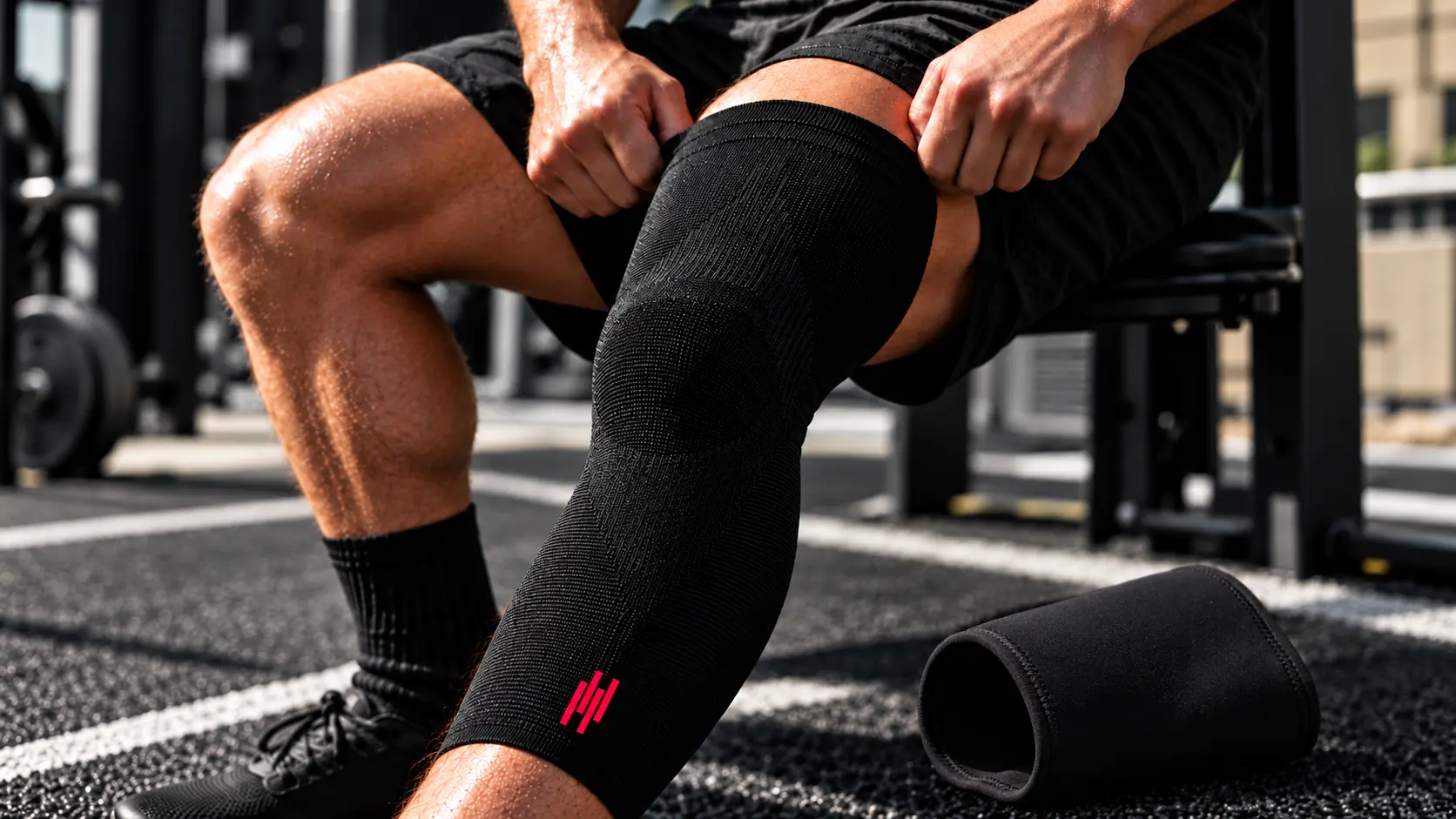
⚡ Quick Answer — Compression Knee Sleeves vs Neoprene for HYROX: 6 Hidden Differences
For HYROX, a thin compression knit sleeve is usually the better pick, while neoprene wins mainly on heavy lifting days. A race stacks eight 1 km runs with sleds, lunges and wall balls, so flexibility, heat and slipping matter more than rigid warmth. Choose neoprene for heavy squat sessions and a knit sleeve for race day and run-heavy training.
You are on your fourth 1 km run, your quads are already heavy, and the sled is coming up. The knee sleeve you picked either disappears or becomes one more thing to fix. That is the real question behind compression knee sleeves vs neoprene: not which one is better in general, but which one survives a race that switches between running and loaded movements every few minutes.
Tired of bulky sleeves that fight your knees on the run? Grab the MAXHOV compression knee sleeves now: a lightweight 80% nylon / 20% spandex knit built for running, sleds and wall balls.

Sold-out race? HYTRACK catches cancelled spots.
When athletes cancel, tickets silently reappear — and disappear just as fast. HYTRACK monitors every HYROX event and sends you an instant SMS or email alert the second a spot opens up or new tickets drop.
- Sold-out ticket recovery alerts
- New event on-sale notifications
- SMS & email — real-time
- All HYROX events worldwide
We analyzed all 16 segments of a HYROX race, the 8 runs and the 8 stations, to find where a knee sleeve helps, where it gets in the way, and what really separates a neoprene sleeve from a compression knit. One disclosure up front: MAXHOV is our own brand, so we compare both types honestly and tell you where neoprene is the better tool.
Before you spend money on gear, make sure you have a race to wear it at. Popular events sell out fast, so check our HYTRACK ticket alerts page to be notified the moment tickets drop or a cancelled spot reappears.
Compression Knee Sleeves vs Neoprene: The Short Answer
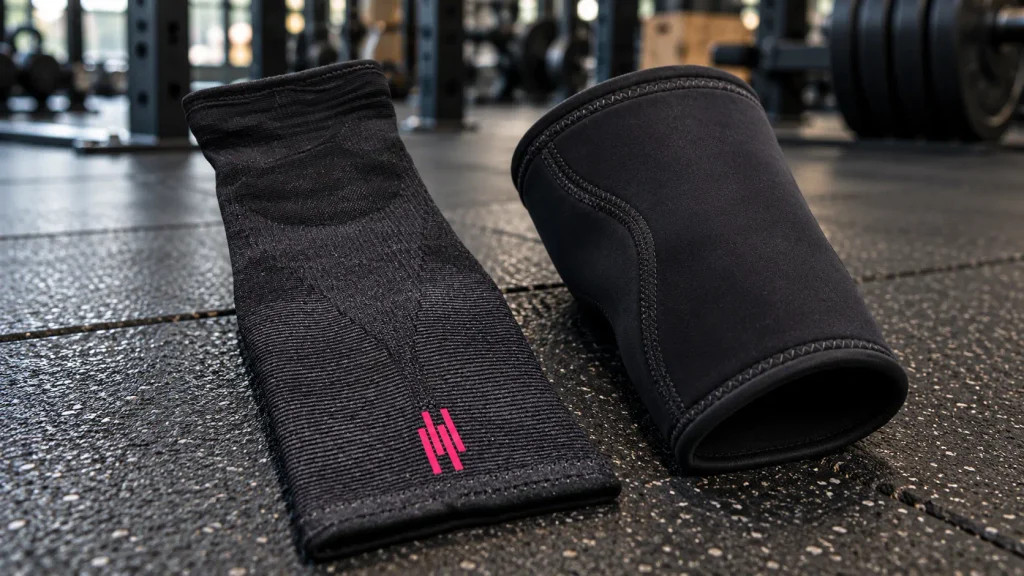
Neoprene knee sleeves are thick, warm and stiff, which suits heavy squats. Compression knit sleeves are thin, flexible and light, which suits long runs and stations like sled work and wall balls. For a HYROX race that alternates running with loaded movements, a knit sleeve is usually the more practical choice.
Here is the compression knee sleeves vs neoprene comparison at a glance. The details and race examples follow below.
| Criteria | Neoprene sleeve | Compression knit sleeve |
|---|---|---|
| Thickness | Thick, often 3 to 7 mm | Thin, lightweight knit |
| Flexibility | Stiffer, resists knee bend | Stretches with the knee |
| Heat | Insulates and traps sweat | Holds less heat |
| Long runs | Can feel bulky | Stays out of the way |
| Heavy squats | Firm, familiar feel | Lighter, less rigid |
| Best use | Heavy lifting days | Running, hybrid work, race day |
The thickness range in the table is typical for lifting sleeves on the market. Always check the exact specification of the product you are considering.
Neoprene vs Compression Knit: What Each Sleeve Actually Is
Both products are called knee sleeves, but they are built for different jobs. A neoprene sleeve is a thick, rubber-based tube designed around heavy barbell work. A compression knit sleeve is a thin, stretchy fabric sleeve designed to stay close to the leg while you move.
If you want to know whether sleeves are worth wearing at all, read our guide on knee sleeves for HYROX. For a wider look at leg compression, see our compression leg sleeve breakdown. This article answers a narrower question: in the compression knee sleeves vs neoprene choice, which type fits the way a HYROX race is built?
One honest limit first. A 2017 literature review of knee sleeve studies found mixed results: twelve of twenty studies reported better gait or function, while eight found no significant effect. As far as we know, no study compares knit and neoprene sleeves over a HYROX-style race, so treat your choice as a comfort decision, not a guaranteed time saver.
The 6 Differences That Matter on Race Day
We walked through the race segment by segment with one question in mind: what changes when you swap the sleeve? These six differences are the ones that moved the answer.
1. Flexibility on runs and lunges
Running puts your knee through thousands of bends, and sandbag lunges add deep flexion on tired legs. A stiff neoprene sleeve resists that bend, while a stretch knit follows it. Over a full race, that small resistance adds up.
2. Heat and sweat over a long race
Heat is where compression knee sleeves vs neoprene differ most. Neoprene is an insulator, which is the point when you want warm joints for a heavy squat. Over a race that lasts well over an hour for most athletes (see how long HYROX takes by division), that same insulation can mean extra heat and trapped sweat around the knee. A thinner knit usually holds less heat, although no sleeve is truly cool.
3. Slipping and bunching between stations
A sleeve that rolls down or bunches behind the knee forces you to stop and adjust, and nobody wants to do that mid-run. Thick neoprene can shift once it gets sweaty. A knit that extends above and below the knee has more surface to hold on to, but fit matters more than material here, so measure before you buy.
4. Feel on sleds, burpee broad jumps and wall balls
The stations ask very different things from the knee. Sled work puts long, loaded strides through the leg, burpee broad jumps need a deep and fast bend, and wall balls repeat a squat under fatigue. A sleeve that limits that range or needs repositioning costs time. Our guides on sled push and pull, burpee broad jumps and wall balls cover the technique side.
5. Feel on heavy lifting days
This is where neoprene earns its reputation. For heavy squats and leg presses, the thick, snug wall gives a firm, warm feel that many lifters like. HYROX is not a one-rep-max sport though, so that firmness matters less during a race than during a strength block.
6. Sizing, fit and care
Sizing differs from brand to brand, so always follow the size guide of the sleeve you choose. Our MAXHOV knit sleeves are sized by upper-thigh circumference, which surprises people who expect a knee measurement. Wash knit sleeves cold and air dry them to protect the elastic.
Where Neoprene Still Wins
A fair look at compression knee sleeves vs neoprene has to admit what the other side does well. If your week includes heavy back squats, front squats or leg presses near your maximum, neoprene is a proven tool and worth owning. It also suits athletes who like a warm, snug sensation during low-intensity work.
A very thick sleeve for a full race is a gamble if you have never trained in it. Test every piece of kit in training first, and never debut new gear on race day.
That test-first rule is also number one on our list of HYROX gear mistakes.
Where a Compression Knit Sleeve Wins for HYROX
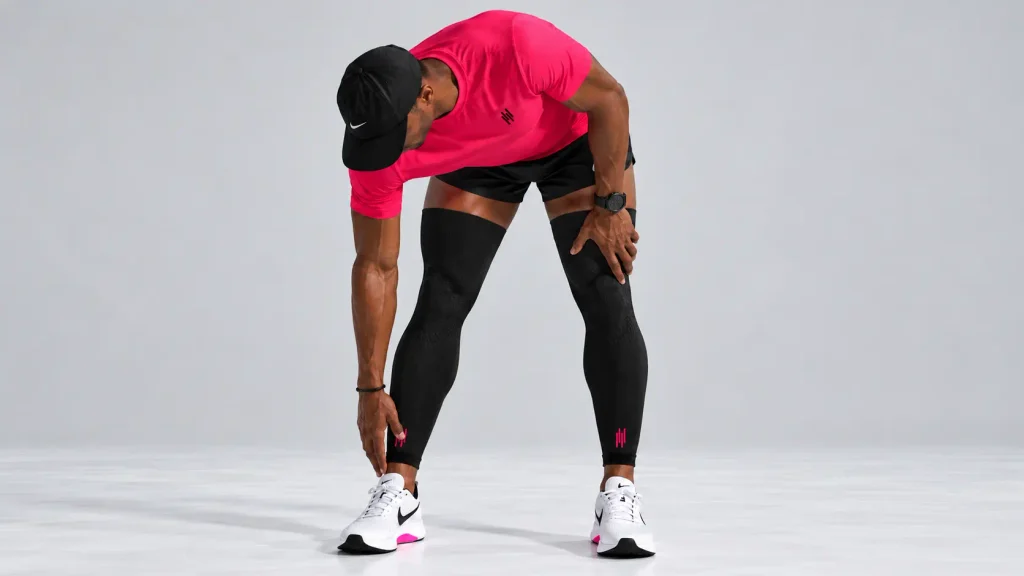
For race day and run-heavy training, a thin knit fits the sport better. It moves with the knee, stays out of the way on runs and lets you switch between running and strength work in the same session without changing gear.
Weigh this as a seller’s view, since MAXHOV is our own brand. Our men’s compression knee sleeves use an 80% nylon and 20% spandex knit with no padding, and they extend above and below the knee for a continuous compression feel. They come in black, white and pink, as a single sleeve or a pair, and you can browse the full compression knee sleeves collection. Check the length against your leg proportions before ordering, because an extended cut will not suit everyone.
Simple rule for compression knee sleeves vs neoprene: heavy squats near your max, choose neoprene. Running, hybrid sessions and race day, choose a knit sleeve.
Compression Knee Sleeves vs Neoprene: Which One for Which Session
The best answer is often both, used on different days. Use the table below as a simple rule for your training week.
| Session | Better pick | Why |
|---|---|---|
| Heavy squat or leg press | Neoprene | Firm, warm feel under load |
| Long run or intervals | Compression knit | Flexible, light, less heat |
| Hybrid run + stations | Compression knit | One sleeve for every movement |
| Race day | Compression knit | Stays out of the way, if tested |
| Easy warm-up | Either | Comes down to preference |
If you are building a full race kit, our best HYROX equipment guide and our picks for the best shoes for HYROX cover the rest, and you can find more in the HYROX gear category.
Common Mistakes When Choosing Knee Sleeves
Most sleeve problems come from the buying decision, not the product itself. These are the mistakes worth avoiding.
- Debuting new sleeves on race day without testing them over a full run-plus-stations session.
- Buying by price or color without measuring the part of the leg the size guide asks for.
- Wearing a thick neoprene sleeve on a long run and expecting it to feel like a squat session.
- Judging compression knee sleeves vs neoprene on looks alone instead of on how they feel during movement.
- Ignoring the care label, which wears out the elastic faster.
A sleeve is gear, not a treatment. If your knee hurts during or after training, get it checked by a physiotherapist or doctor instead of covering it up.
For habits that protect your joints over a full season, read our HYROX injury prevention guide.
Quick Action Plan
Here is the fastest way to settle the compression knee sleeves vs neoprene choice before your next race.
- Decide whether your main goal this month is heavy lifting or running plus stations.
- Measure the part of the leg the size guide asks for, and size up or down based on the fit you want.
- Test a knit sleeve in one full hybrid session: run, sled, lunges and wall balls.
- Keep neoprene, if you own it, for your heaviest squat days.
- Lock in your race spot with HYTRACK ticket alerts so you never miss a sell-out.
For official formats and standards, refer to the official HYROX website.
FAQ
Are compression knee sleeves better than neoprene for HYROX?
For most race situations, a knit sleeve is the more practical option because it flexes with the knee, holds less heat and stays out of the way on runs. Neoprene remains a solid choice for heavy squat days. The right pick depends on whether your session is lift-heavy or run-heavy.
Can I use compression knee sleeves vs neoprene in the same week?
Yes, and many athletes do. Use neoprene for heavy strength sessions and a knit sleeve for running and hybrid work. Just avoid switching to a new sleeve for the first time on race day.
Do neoprene knee sleeves slow you down in a race?
They can feel bulky on long runs and may limit deep knee bend on lunges and wall balls, which can cost small adjustments. No sleeve is guaranteed to change your finish time, so test your setup in training before you commit to it.
What size knee sleeve should I buy?
Follow the brand’s size guide and measure the exact area it specifies. MAXHOV sleeves are sized by upper-thigh circumference. Between two sizes, the smaller one feels firmer and the larger one feels looser.
How do I wash compression knee sleeves?
Wash them cold on a gentle cycle and let them air dry. Avoid tumble drying, ironing and bleach, since heat and harsh chemicals break down the elastic over time.
Training tips & HYROX insights
Join the list — guides, race strategies and performance content, straight to your inbox.