

⚡ Quick Answer — Should You Wear a Lifting Belt for HYROX?
A lifting belt for HYROX is officially allowed on race day and can genuinely help at 2–3 stations — but it is not a simple yes or no decision. A weightlifting belt provides real benefit during Sandbag Lunges and Farmers Carry by increasing intra-abdominal pressure and reducing lower back fatigue under load. However, wearing one through 8 km of running creates friction, restricts breathing rhythm, and costs more than it saves for most athletes. The honest answer: useful in training, situational on race day.
Walk into any HYROX race and you will see some athletes wearing a lifting belt for HYROX — and plenty more wondering if they should. The question seems simple. It is not. A belt that helps you grind through heavy sandbag lunges in training becomes a liability when you are trying to breathe through your sixth kilometer of running. This article gives you the full picture: the rules, the stations where belt use actually helps, the ones where it does not, and how to make the right call for your division and fitness level.
We analyzed movement mechanics across all 8 HYROX stations and cross-referenced athlete feedback from hundreds of race reports to give you an evidence-based answer on when a lifting belt for HYROX earns its place on race day — and when it does not.
Is a Lifting Belt for HYROX Allowed on Race Day?
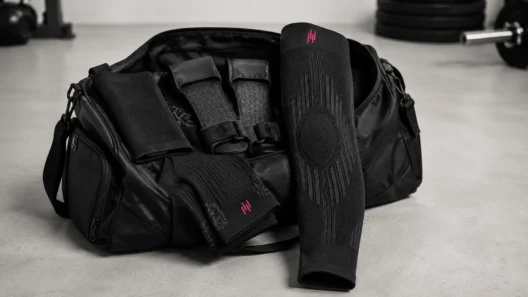
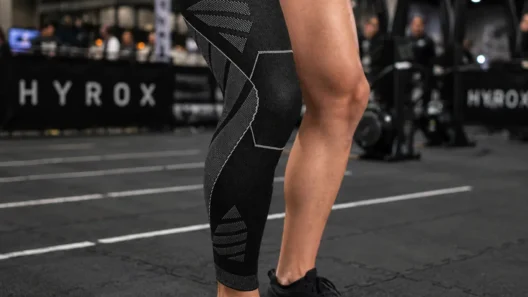
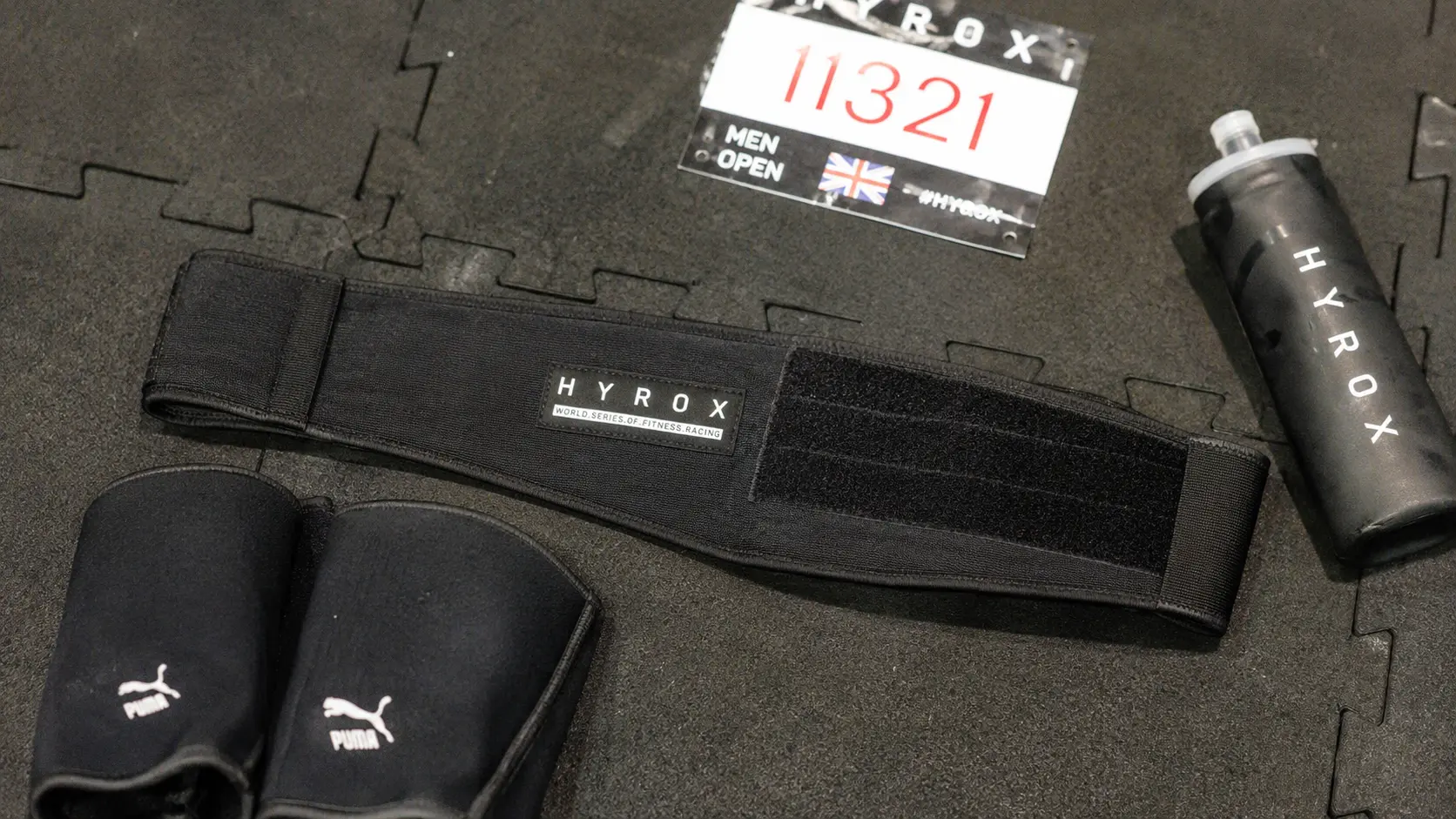
Yes — a lifting belt for HYROX is explicitly permitted under the official 2025/26 rulebook. The HYROX APAC support documentation lists weightlifting belts alongside knee sleeves, gloves, and wristbands as accepted accessories during competition. You will not be penalized, stopped, or disqualified for wearing one on race day.
There is significant misinformation circulating online on this point. Several training guides incorrectly state that the belt is banned in HYROX. That is false. The official rulebook prohibits items that pose a safety risk to other athletes — breathing apparatuses, compressed air cylinders, helmets — but a standard weightlifting belt does not fall into that category. Always verify directly at the official HYROX website or your event’s athlete guide for confirmation.
Weightlifting belts are on the official HYROX permitted accessories list alongside knee sleeves, gloves, wristbands, and hydration packs. You can wear one on race day without any penalty.
What Does a Lifting Belt for HYROX Actually Do?
Before deciding whether a lifting belt for HYROX makes sense, you need to understand what it actually does — because most athletes either overestimate or completely misunderstand the mechanism.
A weightlifting belt does not support your back directly. What it does is give your core something rigid to brace against. When you inhale and push your abdominals outward against the belt, you create significantly higher intra-abdominal pressure (IAP). That elevated IAP stabilizes the lumbar spine under load — reducing the shear and compressive forces that cause lower back fatigue and injury during heavy movements. The belt is a tool for bracing, not a substitute for it.
In a pure lifting context — deadlifts, squats, heavy carries — this mechanism is well established and genuinely useful. In HYROX, the question is whether the stations you face load the spine in a way that makes elevated IAP worth the trade-offs of wearing one for the full race duration.
A lifting belt for HYROX only works if you know how to brace properly. If you have never trained with one before, do not put it on for race day. The skill of bracing against a belt needs to be practiced — otherwise you are just wearing a tight band around your waist with no real benefit.
The 3 HYROX Stations Where a Belt Can Help
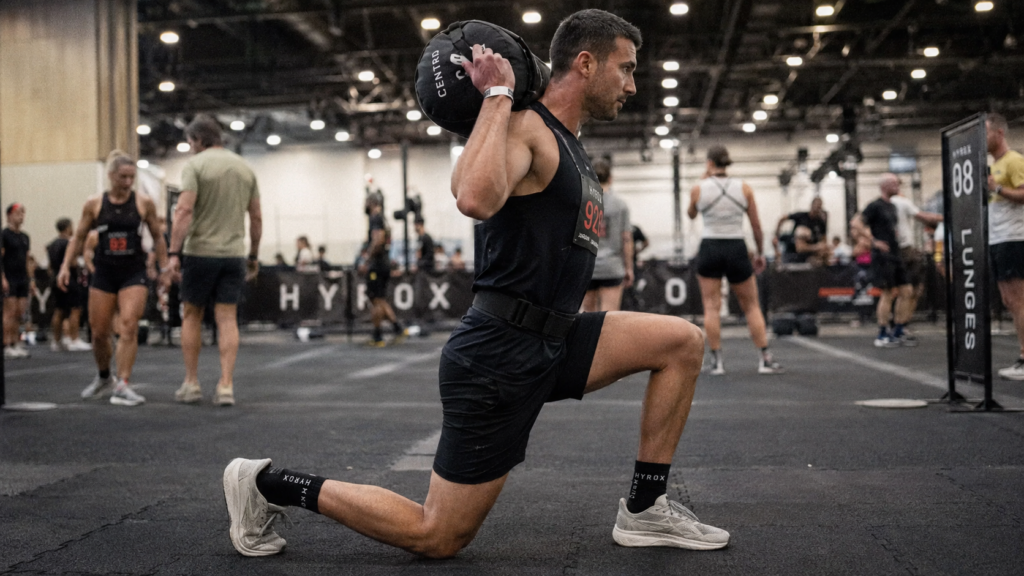
Out of 8 workout stations, a lifting belt for HYROX produces meaningful benefit at a maximum of three. These are the stations that combine significant spinal load, repeated reps, and the kind of cumulative fatigue that degrades bracing quality over time.
Sandbag Lunges: The Strongest Case for Belt Use
This is the single best argument for wearing a belt in HYROX. Sandbag Lunges cover 100 meters with a loaded sandbag on your shoulders — 10 kg for women Open, 20 kg for men Open, higher in Pro divisions. That is 80 to 100 repetitions of a unilateral loaded movement under accumulated fatigue, typically arriving after 6 km of running and five previous stations. The lumbar spine is loaded asymmetrically on every rep, bracing quality degrades as fatigue accumulates, and lower back breakdown at this station is one of the most common performance limiters in HYROX. A lifting belt for HYROX that helps you maintain IAP through the final 30 meters of lunges is a legitimate performance tool here — not just a psychological prop.
Farmers Carry
Farmers Carry covers 200 meters with implements in each hand — 24 kg per hand for women Open, 32 kg per hand for men Open. The bilateral loaded carry creates direct compressive load on the lumbar spine, and the 200-meter distance means you hold that load for an extended period. Athletes who experience lower back fatigue during the carry will find that wearing a belt helps them maintain posture and pace more consistently. It is less critical than Sandbag Lunges, but still a genuine use case for a lifting belt for HYROX.
Sled Push
The Sled Push covers 50 meters with significant load — 102 kg for women Open, 152 kg for men Open. The forward-leaning push position places the lumbar spine under load. However, the benefit of belt use here is more marginal than at the previous two stations. The distance is short, the rep count is low, and most athletes can maintain adequate bracing for 50 meters of sled work without one. If you have a specific lower back vulnerability, a lifting belt for HYROX helps at this station. For most athletes, it is optional.
| Station | Belt Benefit | Why |
|---|---|---|
| Sandbag Lunges | High | 100m loaded unilateral reps, late-race fatigue, lumbar breakdown risk |
| Farmers Carry | Moderate | 200m bilateral loaded carry, sustained spinal compression |
| Sled Push | Low–Moderate | Heavy load but short distance, limited rep exposure |
| Ski Erg | None | Vertical pull pattern, belt restricts breathing rhythm |
| Sled Pull | None | Row-like pull, no significant spinal compression |
| Burpee Broad Jumps | None | Dynamic bodyweight movement, belt restricts floor contact |
| Row Erg | None | Seated movement, belt creates abdominal compression at catch |
| Wall Balls | None | 100 reps of dynamic squat-to-throw, belt restricts breathing |
The 5 Stations Where Belt Use Is Useless (or Worse)

For five out of eight stations, wearing a belt provides zero benefit — and at some of them it actively works against you. The Ski Erg involves a vertical pulling pattern with significant trunk flexion on each rep — the belt sits exactly where you need to breathe and flex, constricting your diaphragm across 1,000 meters of work. The Row Erg has the same problem: the forward lean at the catch is compressed by a tight belt, reducing power output and making breathing labored. Wall Balls demand 100 repetitions of a dynamic squat-to-overhead throw — the belt interferes with both the squat bottom position and the breathing pattern you need to sustain rhythm. Burpee Broad Jumps require full chest contact with the floor: a rigid belt makes getting down and back up mechanically harder. Sled Pull is a low-load rowing pattern that simply does not create the spinal stress that justifies a lifting belt for HYROX.
Wall Balls arrive at station 8 — the final station. You will already be exhausted. A tight belt that restricts your breathing at this point does not protect your back. It just makes 100 reps feel harder than they need to be.
The Running Problem Nobody Mentions
Here is the part most belt discussions skip entirely. In HYROX, you run 8 kilometers. That is not a warm-up — it is a significant portion of your total race time. Using a lifting belt for HYROX through those 8 km creates three specific problems that most athletes underestimate until they are mid-race.
First, friction and chafing. A belt that fits correctly for station work — snug, braced against — becomes a source of skin abrasion during repeated running strides. Over 8 km, that friction compounds. Second, breathing restriction. Running demands a natural diaphragmatic breathing cycle that a tight belt interrupts. Athletes who keep it on for the runs typically report higher perceived effort at the same pace. Third, heat retention. A wide leather or neoprene belt covering your core traps heat in one of the highest blood-flow zones of your body during sustained cardio. In a warm indoor venue, that matters more than most athletes anticipate.
The athletes who manage this best typically loosen the belt significantly between stations — tight enough to feel present, loose enough not to compress the diaphragm. But that adds cognitive load during transitions when you are already fatigued. See our breakdown of where athletes lose the most time in HYROX for the full picture on transition costs.
Training vs Race Day: Two Different Answers

The most useful framing for a lifting belt for HYROX is to separate the training context from the race context entirely. They are not the same question, and the answer to one does not automatically apply to the other.
In training, a weightlifting belt is genuinely valuable for HYROX preparation. When you are doing heavy sandbag lunge intervals, loaded farmers carry progressions, or max-effort sled push sets, the belt helps you train at higher intensities safely and protects your lower back across a high volume of sessions. Most experienced coaches encourage its use for exactly these movements — not because athletes are weak, but because protecting the lumbar spine across a full preparation block is smart programming.
On race day, the calculation changes. You are managing 8 km of running, 8 stations, and significant fatigue across 60 to 120 minutes. The lifting belt for HYROX that helps you hit a training PR on sandbag lunges is now also with you for every run, every Ski Erg pull, and every wall ball. That trade-off is what makes the race-day decision genuinely individual. If you pair your belt decision with a full gear review, our HYROX gear guide covers everything worth considering before race day.
Never wear a lifting belt for HYROX on race day that you have not trained with repeatedly. The bracing mechanics, the fit under fatigue, the friction pattern — all of these need to be dialed in well before competition.
How to Choose the Right Lifting Belt for HYROX
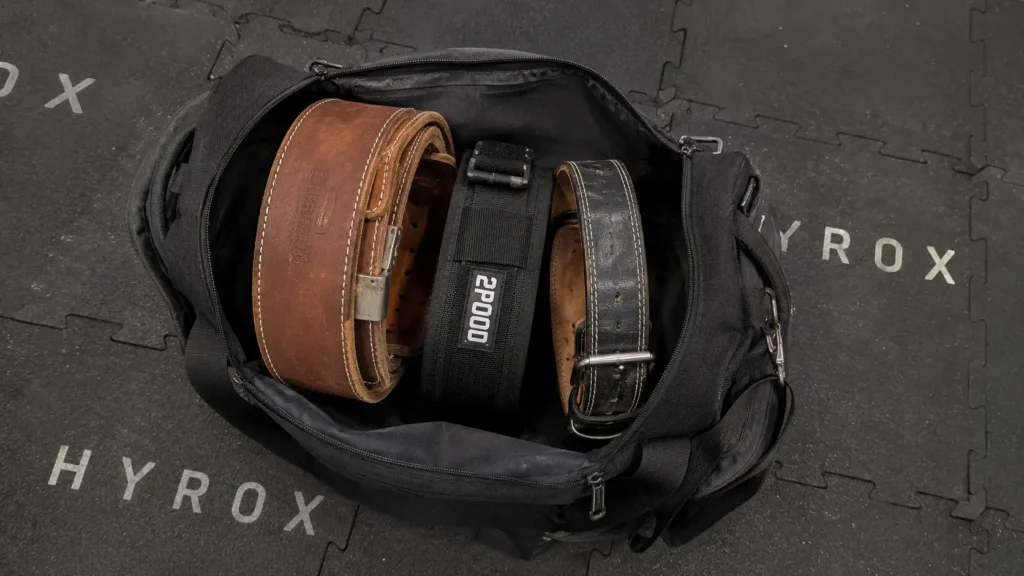
If you decide a lifting belt for HYROX is right for your situation, belt selection matters. Not all belts are built for the movement variety this race demands, and choosing the wrong type creates problems even before you account for the running component.
Avoid thick powerlifting belts. A 10–13mm leather powerlifting belt is designed for maximum IAP during maximal single lifts. It is rigid, wide, and completely unsuitable for 8 km of running or dynamic movements like burpees and wall balls. If you wear one of these, you will feel it within the first 500 meters of your first run.
Opt for a 6–8mm tapered or contoured belt. A tapered design — wider at the back, narrower at the front — provides lumbar support without creating a rigid band across your entire abdomen. Nylon velcro belts in the 4–6 inch back width range are popular because they can be loosened and re-tightened quickly between stations.
Fit is non-negotiable. The belt should sit at your natural waist — not on your hip bones, not riding up into your ribs. Test fit during a full simulation session before committing to it on race day. As our article on common HYROX gear mistakes covers in detail, fit problems that are minor in training become major problems mid-race.
5 Common Mistakes Athletes Make With a Lifting Belt for HYROX
Most belt-related mistakes come down to misunderstanding what the belt is for and when it applies. These are the patterns that show up most consistently.
- Wearing a powerlifting belt for a hybrid race. Thick, rigid belts are designed for maximal single lifts — not for 8 km of running between functional stations.
- Keeping it at full tension for the entire race. Wearing a race-tight belt through runs, Ski Erg, Row Erg, and Wall Balls costs more energy than it protects.
- Using the belt as a substitute for core strength. If your core cannot maintain bracing without it at HYROX loads, the belt masks a training deficit. Build the strength first.
- Racing with a belt you have never trained in. The bracing pattern, the friction zones, the breathing adaptation — all need weeks of practice before race day.
- Wearing it for the wrong stations. Athletes who put on a lifting belt for HYROX specifically for Wall Balls — the station most affected by restricted breathing — are making the decision completely backwards.
These mistakes connect directly to the broader pattern of gear decisions that derail race performance. If you are preparing for your first event, the things nobody tells you before your first HYROX covers the full picture beyond just the belt.
Quick Action Plan: 5 Steps to Decide if a Lifting Belt for HYROX Is Right for You
- Identify your weak point. If Sandbag Lunges or Farmers Carry destroy your lower back in training, a weightlifting belt addresses a real problem. If you have no lumbar issues, the cost-benefit ratio shifts significantly.
- Test in a full simulation first. Wear the belt for an entire race simulation — all 8 stations plus the runs. Note where it helps and where it creates friction or breathing problems.
- Choose the right type. Tapered nylon or 6–8mm leather, not a powerlifting belt. Width matters — too wide across the abdomen restricts breathing on the run.
- Practice loosening and re-tightening fast. If you plan to adjust between stations on race day, that needs to be an automatic habit before competition.
- Make the decision 4 weeks out. Your race-day gear should be confirmed and tested well in advance. Last-minute kit changes are one of the most common and avoidable mistakes in HYROX.
FAQ — Lifting Belt for HYROX
Is a lifting belt for HYROX allowed in races?
Yes. The official HYROX rulebook explicitly lists weightlifting belts as permitted accessories alongside knee sleeves, gloves, and wristbands. Several online sources incorrectly state that the belt is banned — this is false. Always verify with the official HYROX event page for your specific race.
Which HYROX stations benefit most from wearing a belt?
Sandbag Lunges are the clearest use case — 100 meters of loaded unilateral reps late in the race, where lumbar fatigue accumulates fastest. Farmers Carry is the second most relevant station. Sled Push offers marginal benefit for athletes with specific lower back vulnerabilities. All other stations offer no meaningful benefit from a lifting belt for HYROX.
Does wearing a belt affect running in HYROX?
Yes — and this is the most underestimated cost of race-day belt use. A tight belt restricts diaphragmatic breathing, increases perceived effort during running, and creates friction across 8 km. Athletes who keep it fully tightened for the runs typically report that it makes the running segments noticeably harder.
Should beginners use a lifting belt for HYROX?
Generally no — unless they have a specific lower back issue or have trained extensively with one. Beginners benefit more from building core bracing strength and movement quality. Focus first on HYROX-specific training and confirm your gear decisions well in advance of race day.
What type of belt works best for HYROX?
A tapered nylon or 6–8mm leather belt with a velcro or lever closure works better than a thick powerlifting belt. The tapered design — wider at the back, narrower at the front — provides lumbar support without restricting breathing during running and dynamic movements. Avoid anything over 10mm thick or designed exclusively for maximal strength lifts. This is the most important selection criterion when choosing a lifting belt for HYROX.
Can a belt replace core strength training for HYROX?
No. A belt amplifies bracing — it does not create it. If your core cannot maintain neutral spine at HYROX loads without one, the belt is masking a training gap. Build genuine core stability through your HYROX training plan first. Use a lifting belt for HYROX as a performance tool, not a crutch. For official formats and standards, refer to the official HYROX website.
Training tips & HYROX insights
Join the list — guides, race strategies and performance content, straight to your inbox.