

⚡ Quick Answer — Do You Need Knee Sleeves for HYROX?
No — knee sleeves are not required for HYROX, but they can help if you experience knee discomfort during lunges or wall balls under fatigue. Soft neoprene or fabric compression sleeves are allowed on race day. Rigid braces with hard components may be questioned by officials. If you use them, train in them first — never wear new sleeves on race day.
Do you need knee sleeves for HYROX? If you’re asking, you’re probably trying to solve one of two problems: (1) you want more knee comfort and stability during high-rep stations like lunges and wall balls, or (2) you’re worried about what’s allowed on race day. The truth is that knee sleeves can help some athletes, do nothing for others, and even backfire if you rely on them the wrong way. This guide covers HYROX rules and standards, when sleeves make sense, how elites use them, what officials actually check, and how to choose the right knee sleeves for your body and race plan.
Quick Answer: Do You Need Knee Sleeves for HYROX?
You don’t need knee sleeves for HYROX, but they can help if you get knee irritation during lunges, wall balls, or high-volume training. Most athletes perform fine without them. If you use knee sleeves for HYROX, pick a comfortable compression sleeve (not a stiff brace) and train in them first.
- ✅ Useful for knee warmth and mild support under fatigue
- ✅ Can reduce discomfort during lunges and wall balls
- ❌ Not a fix for poor technique or weak hips/quads
- ❌ New sleeves on race day can cause chafing or slipping
Before upgrading your gear, check the total cost of HYROX in the US.
Are Knee Sleeves Allowed in HYROX?
In most HYROX events, knee sleeves are generally treated like supportive apparel rather than performance-altering equipment. That said, HYROX is strict about maintaining standardized competition conditions, so anything that looks like a rigid brace, has hard components, or could be considered a medical device may draw attention from judges or staff.
The safest approach is simple: use soft neoprene or fabric compression knee sleeves without metal hinges or hard plastic supports. If you’re unsure, check the official HYROX guidance and event standards on the HYROX website before race weekend. (HYROX official site)
If your knee sleeves for HYROX look like powerlifting gear or a rehab brace, you’re increasing the risk of being asked questions at check-in or on the floor. Keep it simple, standard, and clearly “athletic apparel.”
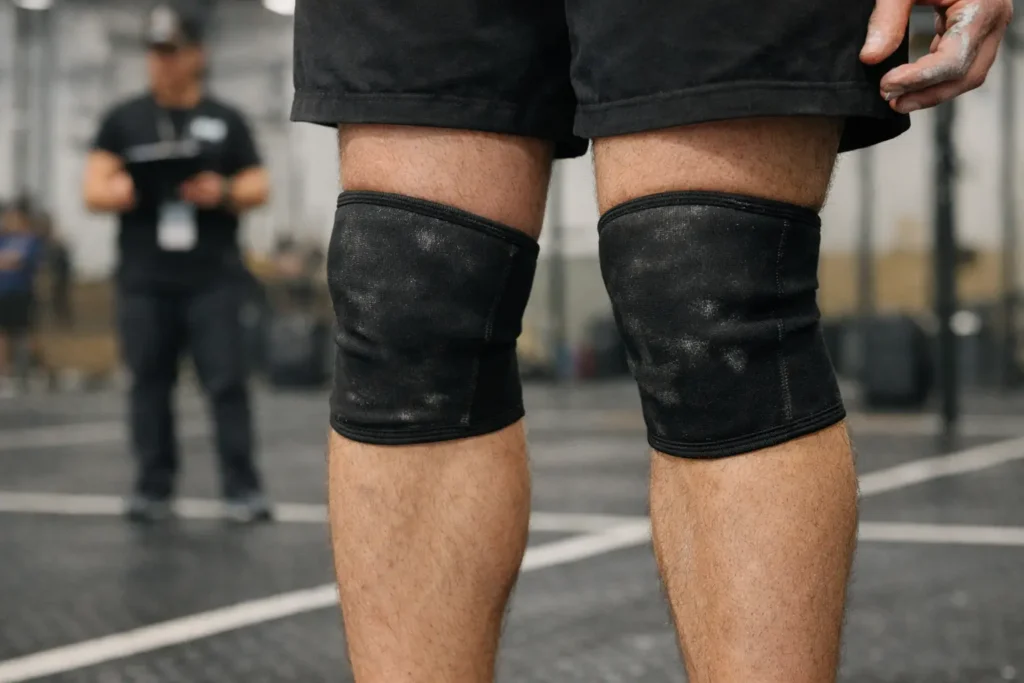
What Knee Sleeves Actually Do (and What They Don’t)
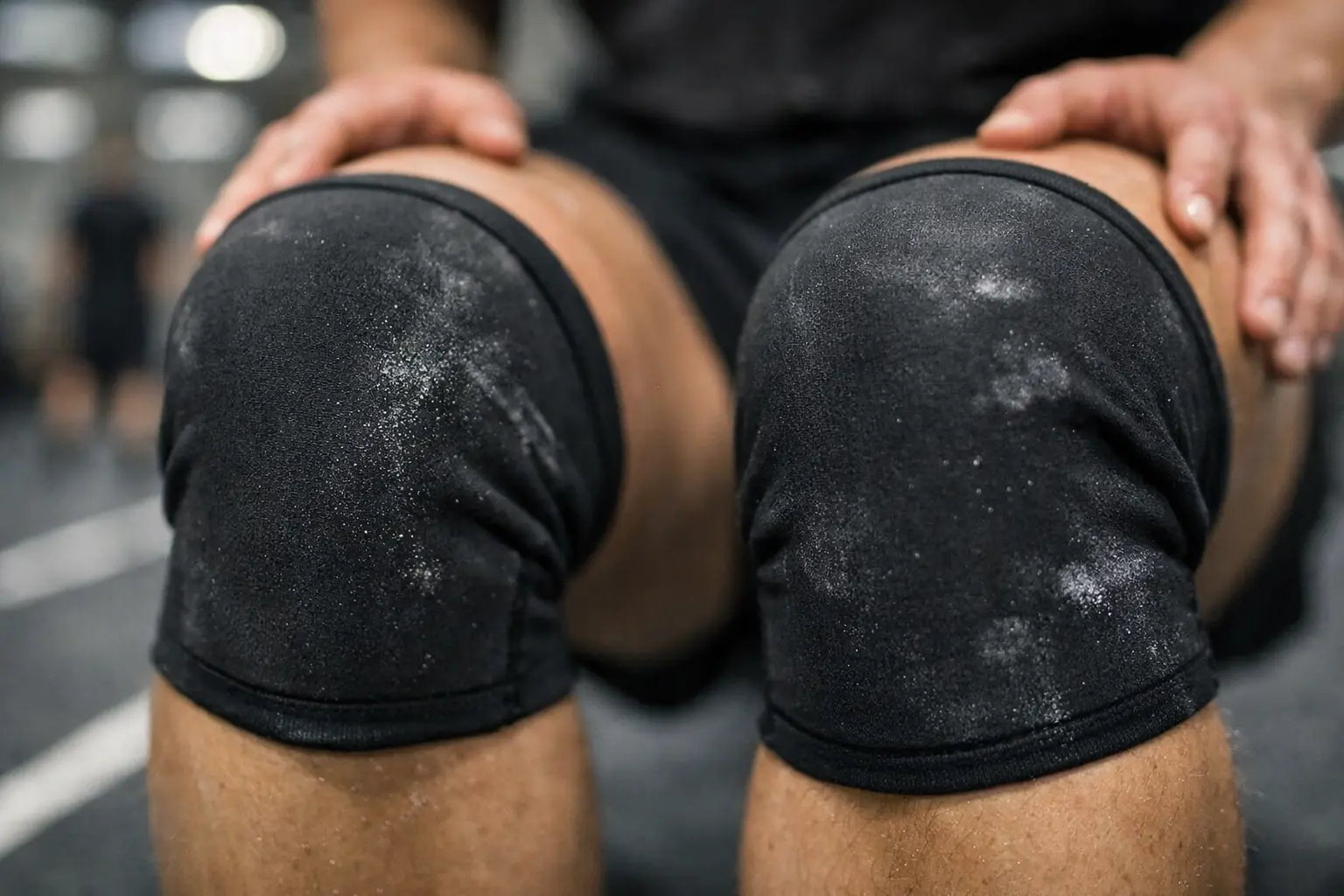
Knee sleeves mainly provide three things: warmth, light compression, and proprioceptive feedback (you “feel” your knee position more). For many athletes, that’s enough to reduce minor irritation when fatigue increases and movement quality drops late in the race.
What knee sleeves don’t do: they don’t replace strength, they don’t correct tracking issues by themselves, and they don’t magically protect you from bad mechanics. If your knees cave inward on lunges or your wall ball squat turns into a forward-collapse pattern, sleeves won’t solve the root cause.
So do you need knee sleeves for HYROX? Only if they solve a specific problem you’ve already identified in training. If you’re buying them because you think everyone uses them, you’ll likely waste money and complicate race-day comfort.
🦵 Coming Soon
Built for HYROX Knees: Compression Designed for the Movements That Hurt Most
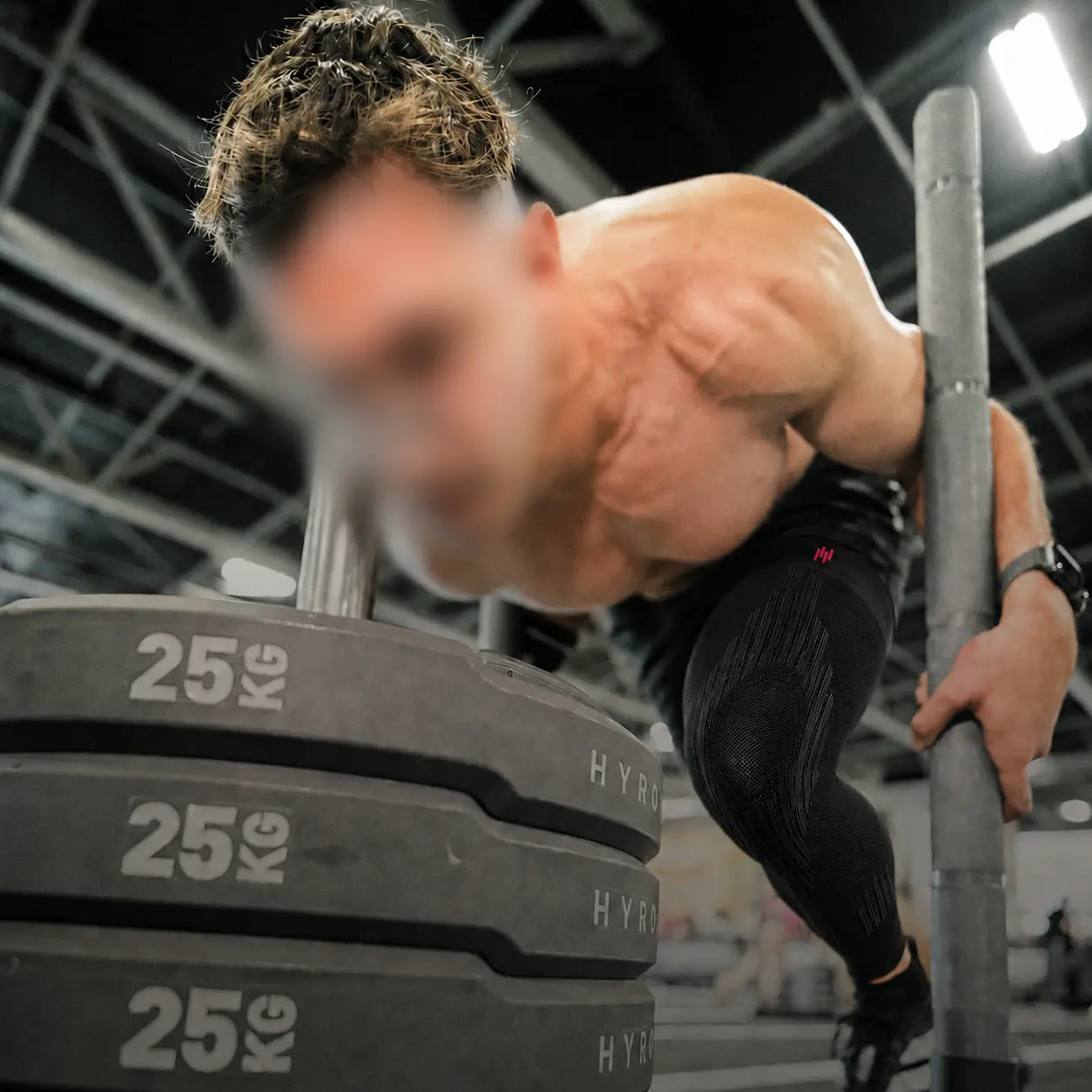
Knees take more abuse in HYROX than any other joint. Sled push, sled pull, lunges, and the repeated impact of running between stations all load the same tendons and cartilage over and over. That’s why we designed our compression sleeves specifically around HYROX injury prevention, not generic gym wear repurposed for racing.
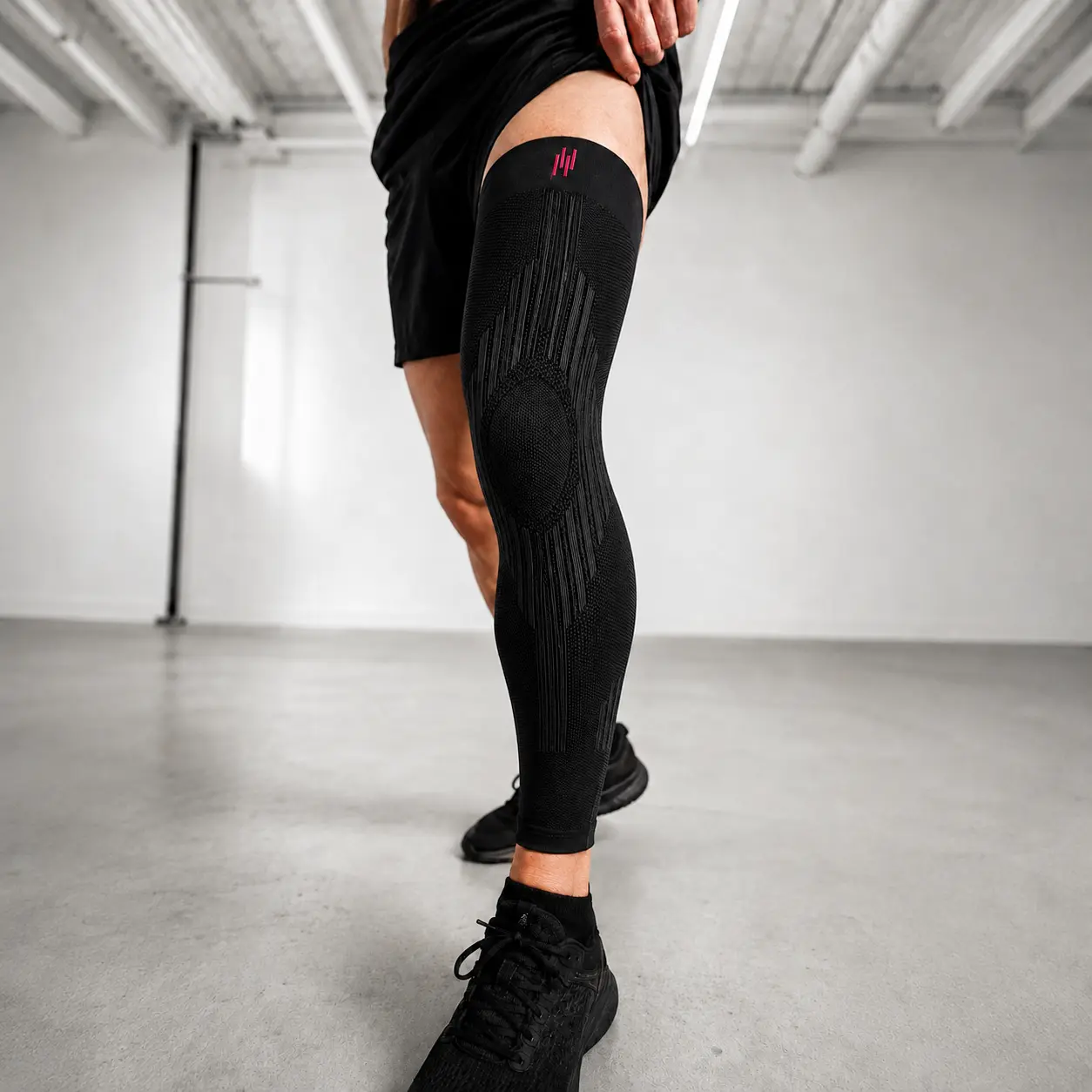
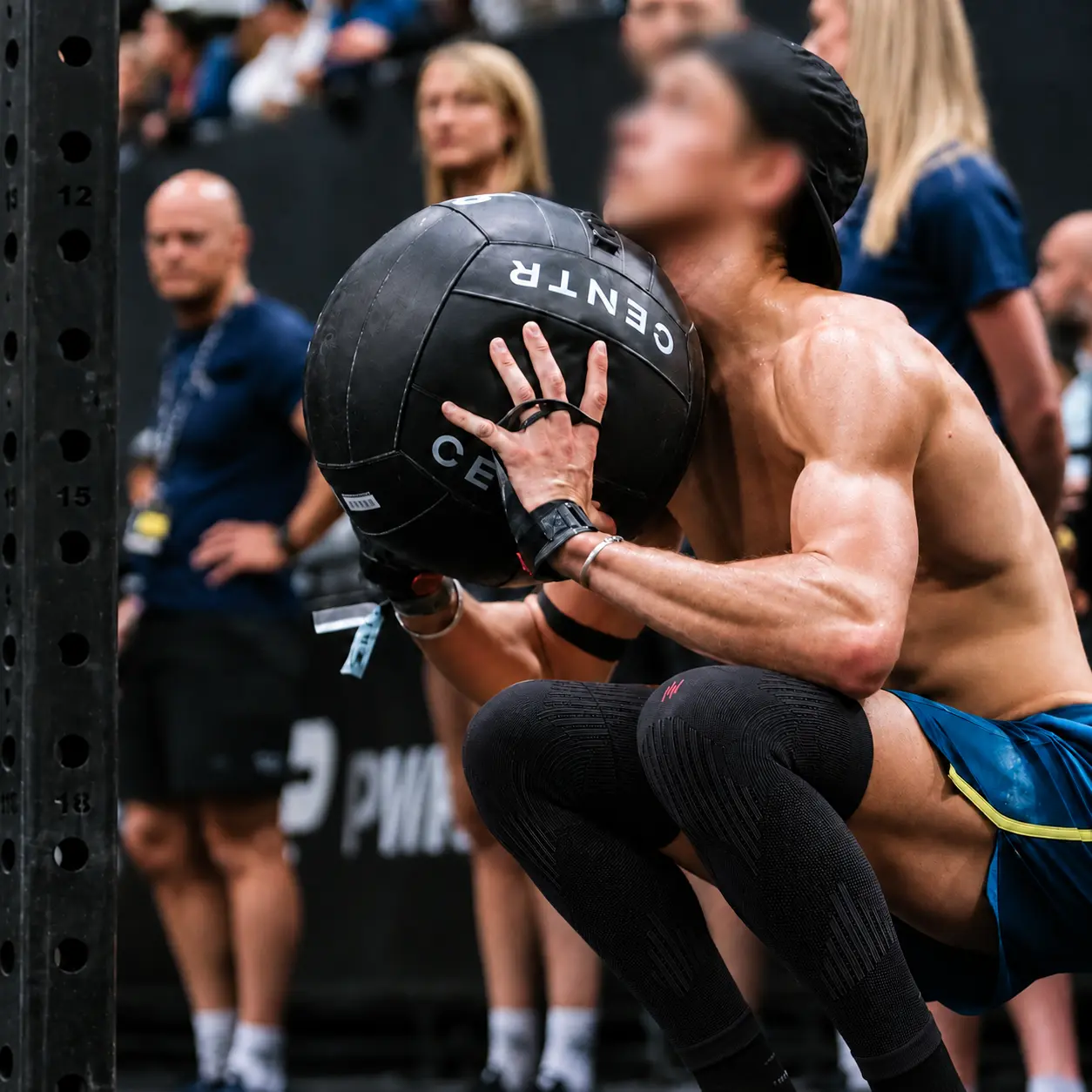
Most compression products on the market are cut for running or lifting alone. Ours are engineered around the actual biomechanics of a HYROX race: graduated pressure zones that stabilize the patella through deep knee flexion on the sled, reinforced panels that hold their compression through lunges and wall balls without sliding or bunching, and a breathable, moisture-wicking knit built to perform across 8km of running plus eight stations — not just look good in the gym.
This is HYROX injury prevention gear, not an accessory. Every seam, panel, and pressure zone was tested against the movements that actually cause knee pain in this sport.
Join the waitlist for early access
Be first to know when the collection launches — early access members get first pick of sizes and an exclusive launch price.
Where Knee Sleeves Help Most in HYROX
HYROX is not evenly stressful across all movements. Knee sleeves tend to matter most where repeated knee flexion meets fatigue and time pressure. That usually means stations with squatting patterns and long sets under breathing stress.
The two most common “knee sleeve moments” are lunges and wall balls. Lunges load the knee in a stretched position while your hips are tired from running. Wall balls add high-volume squatting while heart rate stays high. If you get knee discomfort in HYROX, these are typically the triggers.
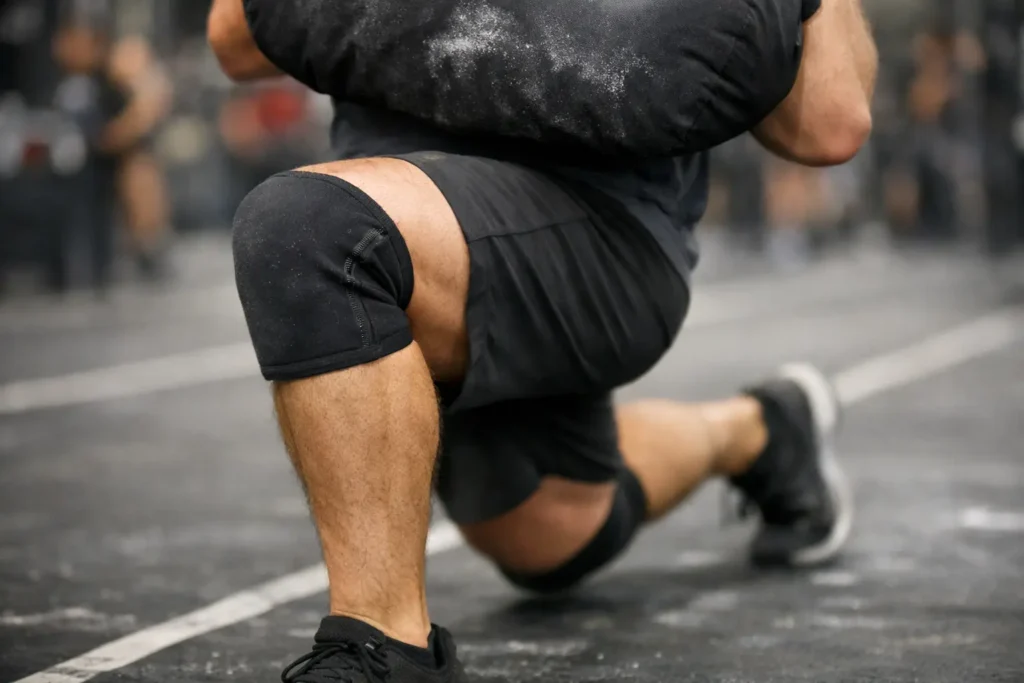
- Sandbag lunges: knee warmth and feedback can help keep alignment late-race
- Wall balls: compression can reduce “ache” during high reps under fatigue
- Running under fatigue: some athletes feel more stable during downhill-like impacts on tired legs
If you’re building your race setup, align your gear choices with your real weak points. Your best reference is your own training sessions, not what looks popular on social media. For a broader checklist, see the HYROX gear guide. If it’s your lower leg (not your knee) that feels the fatigue during running and stations, a compression leg sleeve for HYROX targets that area more directly than a knee sleeve.
When Knee Sleeves Can Hurt Performance
Knee sleeves can backfire for three reasons: heat, restriction, and distraction. If sleeves are too tight, they can restrict circulation, create an uncomfortable pressure point behind the knee, or limit knee flexion just enough to change your squat rhythm on wall balls.
They also increase heat and friction. HYROX is sweaty. Many athletes end up with chafing at the top seam or behind the knee. If you’ve never trained long sessions in sleeves, race day is not the time to find out.
Finally, sleeves can become a mental crutch. If your plan depends on sleeves to “save your knees,” you’re ignoring technique and strength work that actually determines resilience. That’s why the best approach is: test, validate, then decide.
Knee Sleeves vs Knee Braces vs Compression Sleeves (Comparison)
Not all “knee support” is the same. If you’re searching do you need knee sleeves for HYROX, you may also be wondering if braces or compression sleeves are better. Here’s the practical difference for race day.
| Option | What It Is | Best For |
|---|---|---|
| Knee sleeves (neoprene) | Warmth + mild compression | Minor irritation, warmth, confidence |
| Compression sleeves (fabric) | Light compression, breathable | Heat-sensitive athletes, mild swelling |
| Knee braces (rigid/hinged) | Structural support components | Medical need / injury history |
For most competitors, a standard neoprene knee sleeve or breathable compression sleeve is the only option worth considering. If you require a brace for a medical reason, plan ahead and confirm acceptance with event staff rather than assuming.
What Officials Actually Check (and What They Don’t)
HYROX officials are primarily focused on movement standards, lane boundaries, distances, and fair completion of the work. Knee sleeves rarely matter unless they look like rigid equipment or interfere with the station standard.
- They check movement standards (depth, targets, full distances) far more than apparel.
- They may question rigid braces or gear with hard components.
- They won’t “approve” sleeves for performance—your responsibility is to comply and not interfere.
Practically, the bigger risk is not being stopped for sleeves. The bigger risk is adding friction, discomfort, or distraction that costs you time. If you want a full race-day compliance overview, the HYROX events guide is a good reference point.
Common Mistakes Athletes Make With Knee Sleeves in HYROX
Most problems come from buying sleeves late and treating them like insurance. HYROX exposes every gear mistake because you’re moving, sweating, and transitioning under pressure.
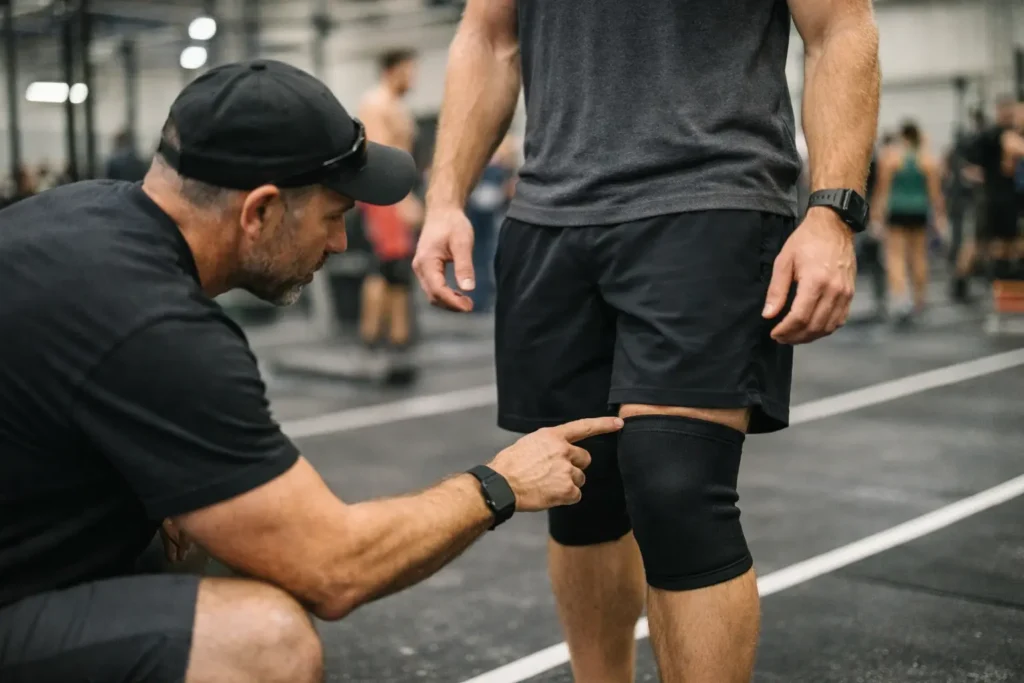
- Choosing sleeves that are too tight and losing comfort after 30–40 minutes
- Wearing brand-new sleeves on race day (chafing, slipping, overheating)
- Using sleeves to compensate for poor lunge or wall ball mechanics
- Ignoring the need to practice running while wearing sleeves
- Assuming “elites wear it” means “you need it”
If you’re newer to the sport, solve fundamentals first. A structured progression is usually more valuable than any accessory. Start with the HYROX beginner guide and build durability through training.
How to Avoid Penalties and Stay Comfortable
Knee sleeves themselves aren’t typically a penalty issue. Comfort and performance are the real reasons to be careful. If your sleeves slip during wall balls or bunch behind the knee during lunges, your movement pattern changes and fatigue increases.
Use these rules to avoid problems: size for comfort, test in long sessions, and avoid rigid brace-like designs unless medically necessary. Most importantly, make sure sleeves do not distract you. HYROX pacing is already hard enough without gear management.
- Train at least 3–5 hard sessions in the same sleeves before race day
- Test them during lunges, wall balls, and a run-station-run workout
- Use anti-chafe balm if you get friction behind the knee
- Pick breathable sleeves if you overheat easily
If you need help building station durability and pacing under fatigue, use a proven plan from HYROX training resources rather than guessing.
What Elite HYROX Athletes Do With Knee Sleeves
Elites don’t treat sleeves as protection. They treat them as a comfort tool. Many top athletes either skip sleeves completely or use a thin sleeve mainly for warmth and consistency—especially in colder venues or early heats.
The key difference is that elites already have efficient movement patterns. Their knees track well, their lunge stride stays stable under fatigue, and their wall ball rhythm is consistent. Sleeves don’t create performance; they reduce friction in an already-strong system.
If your form breaks down, copying elite gear won’t fix it. Improve mechanics first. Then decide if knee sleeves for HYROX add anything meaningful for you.
How to Choose Knee Sleeves for HYROX
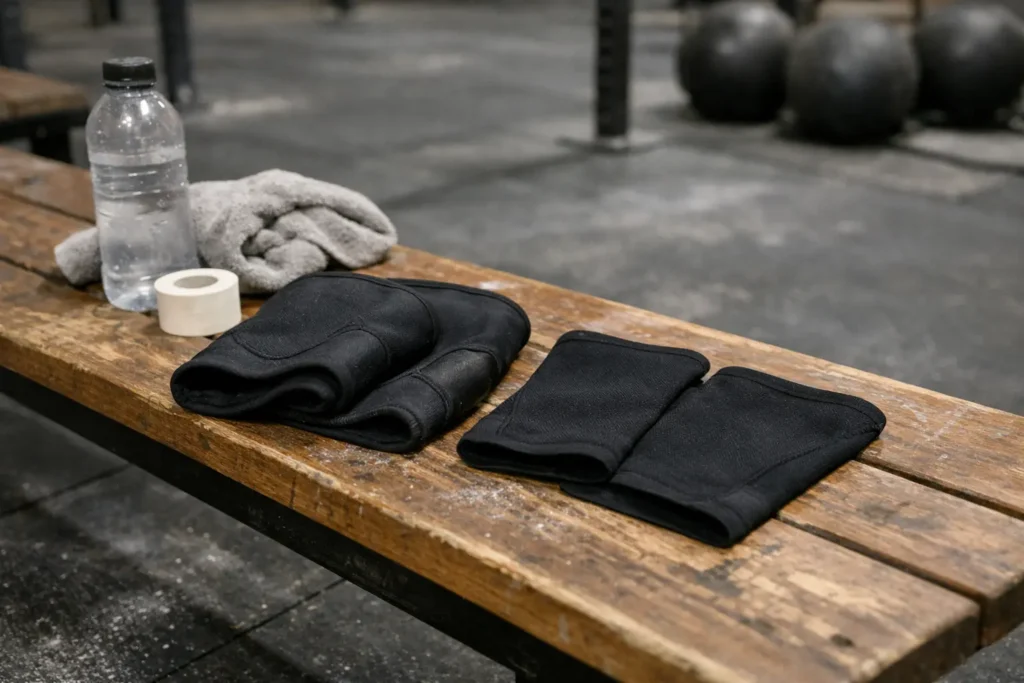
Choosing the right knee sleeves for HYROX is about comfort under sweat and repeated bending. You want sleeves that stay in place, don’t pinch behind the knee, and don’t feel like a brace. For most athletes, a 3–5 mm neoprene sleeve or a snug fabric compression sleeve works best.
Pick based on your issue:
- If you want warmth and a “supported” feel: choose neoprene sleeves (not too thick).
- If you overheat or hate stiffness: choose breathable fabric compression sleeves.
- If you have a true injury history: consult a clinician and confirm your solution won’t interfere with race standards.
And remember the core question: do you need knee sleeves for HYROX? The right answer is “only if they solve a problem you’ve already proven in training.” If your discomfort sits lower on the shin or calf rather than the knee joint itself, check our dedicated guide to the best compression leg sleeve for HYROX instead.
FAQ – Knee Sleeves for HYROX
Are knee sleeves allowed in HYROX races?
Knee sleeves are generally allowed as supportive apparel, especially soft neoprene or fabric compression sleeves. Avoid rigid braces with hard components unless medically necessary. If you’re uncertain, verify with official event guidance before race weekend to prevent surprises.
Do knee sleeves help for HYROX wall balls?
They can help if wall balls trigger knee irritation or you feel unstable when fatigue rises. Sleeves provide warmth and feedback that may improve comfort and rhythm. They won’t replace proper squat mechanics, pacing, or quad endurance, which matter more for performance.
Should beginners wear knee sleeves for HYROX?
Most beginners don’t need them. Start by improving technique, building leg endurance, and pacing well. If you consistently get mild knee discomfort in training—especially during lunges and wall balls—then testing sleeves in several workouts can be reasonable.
What thickness knee sleeves are best for HYROX?
For HYROX, thinner sleeves often work better than thick powerlifting sleeves. A 3–5 mm neoprene sleeve is usually enough for warmth and comfort without restricting movement. If you overheat, a breathable fabric compression sleeve may be a better choice.
Can knee sleeves cause problems during a HYROX race?
Yes. If sizing is wrong, sleeves can slip, pinch behind the knee, or cause chafing—especially in sweaty conditions. They can also feel restrictive during wall balls and lunges. Never wear new sleeves on race day. Test them in long, hard sessions first.
Final Verdict
Do you need knee sleeves for HYROX? Most athletes don’t. But knee sleeves can be a useful comfort tool if you get mild knee irritation during lunges, wall balls, or high-volume training. Keep them simple, train in them first, and don’t use sleeves as a substitute for strong mechanics and leg endurance. If they make your race feel smoother without causing heat or chafing, they’re worth it. If they add distraction, skip them.
Training tips & HYROX insights
Join the list — guides, race strategies and performance content, straight to your inbox.