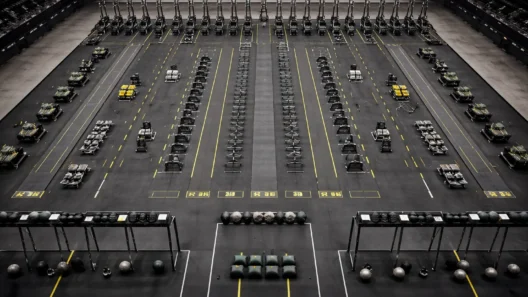


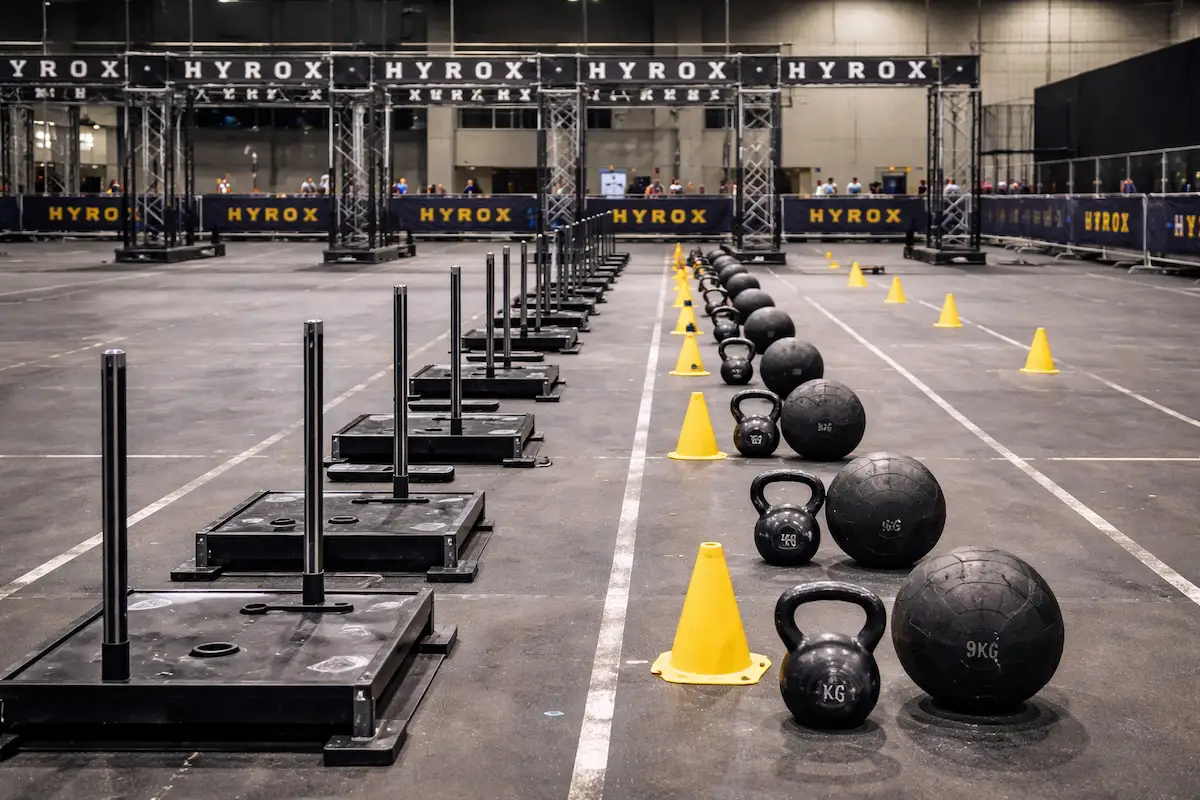
Many athletes assume that being in great shape automatically guarantees strong HYROX performance. In reality, race results often surprise even experienced competitors. Athletes with excellent conditioning still struggle during HYROX events because the race format exposes weaknesses that normal training does not reveal.
HYROX combines endurance, strength, pacing strategy, and fatigue management in a standardized competition format. Understanding what actually determines HYROX performance is essential for anyone preparing for their first race or trying to improve their finish time. This guide explains the key factors that influence performance, the most common mistakes athletes make, and how elite competitors structure their race strategy.
HYROX follows a standardized competition format combining running and functional workout stations. The official race structure and movement standards are described on the HYROX race format page, which outlines how each event is organized and judged.
Quick Answer: What Determines HYROX race results?
HYROX performance depends less on raw fitness and more on fatigue management, pacing, and execution efficiency across running and workout stations. Athletes perform best when they control early pace, maintain movement quality under fatigue, and minimize time lost during transitions.
- ✅ Controlled pacing across all eight runs
- ✅ Efficient station execution under fatigue
- ✅ Stable running splits throughout the race
- ❌ Starting too fast during the first kilometers
- ❌ Poor transitions between stations
- ❌ Losing technique under fatigue
Why Raw Fitness Does Not Guarantee HYROX Performance
Many athletes enter HYROX with strong endurance or impressive strength numbers but still struggle to maintain consistent results. The reason is simple: HYROX does not measure isolated fitness. It measures how well your fitness survives cumulative fatigue.
The race format alternates between 1 km runs and demanding functional workouts such as sled pushes, farmer carries, and wall balls. This structure forces athletes to maintain movement efficiency even while fatigued. As a result, HYROX race efficiency depends on how well athletes manage transitions between endurance and strength demands.
The official race format published by HYROX confirms that every event follows the same standardized structure, which means pacing and race management become critical factors for consistent performance.

The Key Components That Drive HYROX Performance
Elite athletes approach HYROX differently from recreational competitors. Instead of focusing purely on fitness capacity, they optimize race structure and execution.
Four main elements consistently determine strong HYROX race execution: pacing strategy, fatigue resistance, station efficiency, and transition speed.
- Pacing discipline across all runs
- Movement efficiency during stations
- Minimal drop-off between early and late stages
- Fast but controlled station transitions
Athletes who ignore these elements often experience strong starts followed by dramatic performance decline later in the race.
How Pacing Strategy Influences HYROX Performance
Pacing mistakes are one of the most common reasons athletes underperform in HYROX. The first two kilometers usually feel manageable, which encourages many competitors to run faster than their sustainable pace.
This early aggression leads to elevated heart rate and reduced recovery capacity. When athletes reach later stations, execution quality declines and valuable seconds are lost. Maintaining stable pacing is therefore one of the most important factors for consistent race performance in HYROX.
Many beginners discover this mistake during their first race. If you are preparing for your first event, our HYROX beginner guide explains how pacing strategy influences race outcomes.
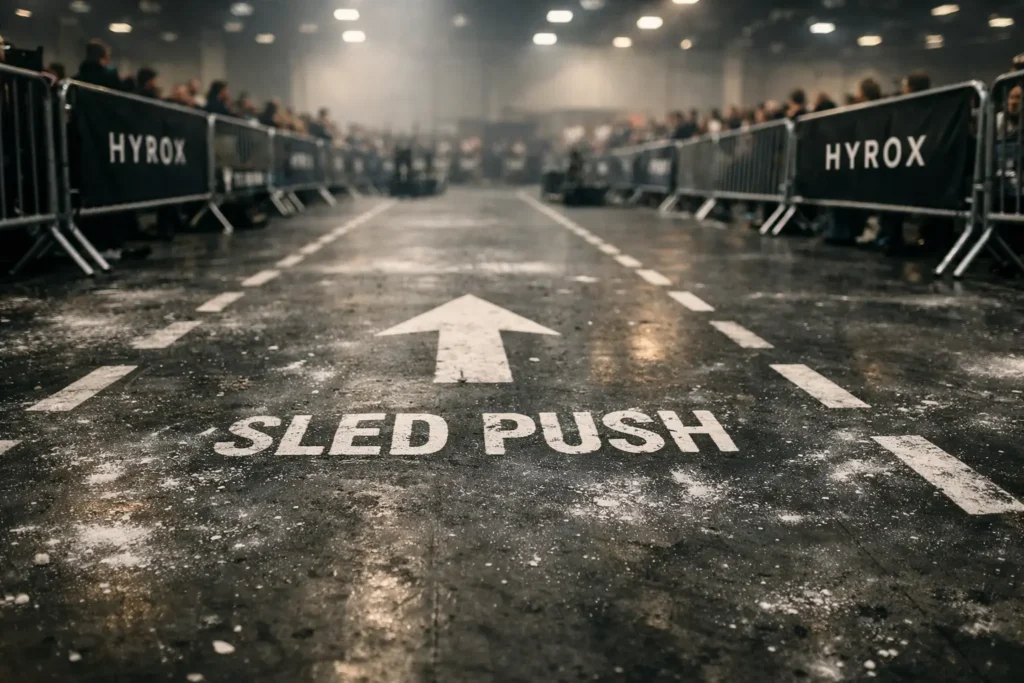
Station Efficiency: Where HYROX Performance Is Won or Lost
While running receives the most attention, many athletes lose the majority of their time during workout stations. Small inefficiencies compound quickly under fatigue.
Grip failure, poor breathing control, and rushed technique can all reduce HYROX performance. Elite athletes focus on maintaining movement quality rather than maximizing speed during stations.
Equipment choices can also influence efficiency. Athletes often experiment with grips, gloves, and knee support to preserve stability and reduce fatigue. Our HYROX gear guide explains which equipment choices actually improve performance.
Comparison: Recreational vs Elite HYROX Performance Strategy
| Factor | Recreational Athletes | Elite Competitors |
|---|---|---|
| Pacing Strategy | Fast early pace | Controlled negative split pacing |
| Station Execution | Speed-focused | Technique-focused |
| Transitions | Unstructured | Pre-planned and efficient |
| Fatigue Management | Reactive | Strategic and controlled |
| Overall HYROX Performance | Inconsistent results | Stable race output |
What Officials Actually Evaluate During a HYROX Race
HYROX races are standardized competitions with strict movement standards. Judges monitor repetition quality, station completion, and equipment compliance. Maintaining correct movement patterns under fatigue directly impacts HYROX performance because penalties or inefficient reps increase total race time.
- Correct repetition standards
- Full station completion
- Proper equipment use
- Transition timing between stations
Understanding race standards is essential for avoiding unnecessary penalties and preserving overall performance.
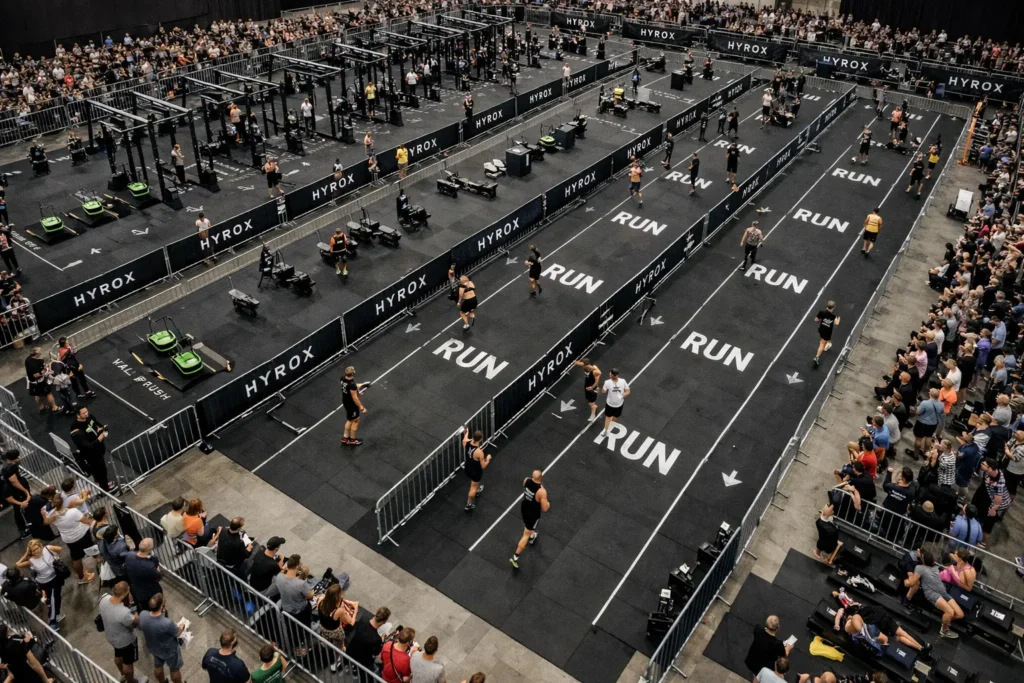
Common Mistakes That Reduce HYROX Performance
Several mistakes consistently appear among first-time competitors and even experienced athletes.
- Starting the race too aggressively
- Neglecting transition practice
- Overestimating running recovery
- Ignoring technique under fatigue
- Using unfamiliar equipment on race day
Correcting these mistakes often leads to significant improvements in HYROX performance even without major fitness gains.
How to Improve HYROX Performance in Training
Improving race performance requires training that mirrors race structure. Athletes who consistently perform well in HYROX integrate running intervals, compromised strength work, and controlled pacing sessions.
Training sessions should simulate the fatigue pattern of the race rather than isolate individual fitness components. Our HYROX training guide outlines the type of workouts that build transferable race performance.
Many athletes also analyze previous race results and competition formats when preparing for events. Our HYROX events guide explains how race environments and layouts can influence strategy.
How Elite Athletes Structure HYROX Performance
Elite competitors approach HYROX performance very differently from recreational athletes. Instead of chasing maximum effort in every section, they focus on maintaining stable output across the entire race. The goal is not to dominate individual stations but to avoid performance collapse later in the event.
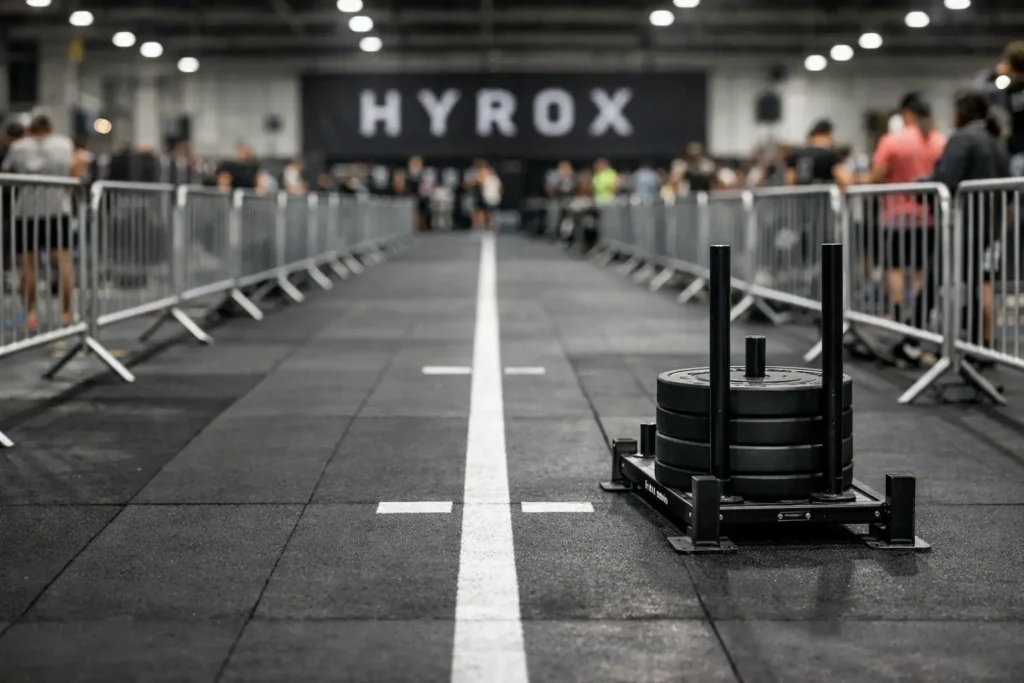
Most top competitors aim for controlled pacing during the first half of the race. They deliberately hold back slightly during the opening runs so that heart rate remains manageable when fatigue accumulates. This pacing discipline allows them to maintain efficient execution when they reach later stations such as lunges and wall balls.
Another important element of elite HYROX performance is transition efficiency. High-level athletes minimize time entering and exiting stations by organizing their breathing, grip, and setup before beginning each workout. These small efficiencies rarely look dramatic, but across eight stations they can save several minutes.
Elite athletes also prioritize consistency rather than peak effort. Their running splits remain stable throughout the race and their movement patterns remain technically sound even under fatigue. This stability is one of the clearest indicators of strong HYROX performance.
Training Methods That Improve HYROX Performance
Improving HYROX performance requires training that reflects the demands of the race. Traditional gym workouts often isolate strength or endurance, but HYROX forces athletes to combine both while fatigued. Training must therefore replicate this combined stress.
One of the most effective methods is compromised running. This involves performing running intervals immediately after strength exercises such as sled pushes or lunges. By training in a fatigued state, athletes learn to maintain efficient running mechanics even when their legs are already under stress.
Another key element is station pacing practice. Many athletes lose time because they rush early repetitions and exhaust themselves too quickly. Practicing controlled tempo during workouts helps maintain stable HYROX performance throughout the entire race.
Finally, race simulation workouts are essential. These sessions replicate the sequence of runs and stations used in the actual competition. They help athletes understand how fatigue accumulates and how pacing adjustments influence overall HYROX performance.
FAQ – HYROX Performance
What improves HYROX performance the most?
The biggest improvements in HYROX performance usually come from pacing strategy and station efficiency rather than additional fitness. Athletes who control their running pace and maintain movement quality during stations consistently perform better than athletes who rely only on raw endurance.
Is running the most important factor for HYROX performance?
Running represents a large portion of total race time, but HYROX performance also depends heavily on station execution and fatigue resistance. Athletes who run well but struggle during functional workouts often lose significant time during the middle stages of the race.
Why do strong athletes struggle in HYROX?
Strong athletes sometimes rely on peak capacity rather than sustainable pacing. HYROX performance requires balanced endurance, technique efficiency, and fatigue management rather than maximum output during individual efforts.
How long does it take to improve HYROX performance?
Most athletes notice meaningful improvements in HYROX performance after several months of structured race-specific training. Improvements often come from better pacing strategy and station efficiency rather than dramatic fitness gains.
Do elite athletes train differently for HYROX performance?
Elite athletes prioritize race simulations, controlled pacing workouts, and transition practice. Their training focuses on maintaining stable output under fatigue, which allows them to sustain strong HYROX performance throughout the entire race.
Final Verdict
HYROX performance is not simply a reflection of how fit you are. It reflects how well your fitness holds up under cumulative fatigue, structured pacing, and technical execution across the entire race.
Athletes who succeed in HYROX prioritize pacing control, efficient station execution, and fatigue management. When training mirrors the race structure and athletes focus on sustainable output, consistent race results become achievable.