

HYROX gear can feel overwhelming when you’re new to the sport. Shoes, grips, belts, vests, sleeves — it’s easy to think you need everything to perform well.
You don’t.
This HYROX gear guide focuses on what actually matters for beginners: practical, race-legal equipment that improves comfort and performance without overcomplicating your setup.
If you’re completely new to the sport, start with our
HYROX Beginner Guide and Before buying any gear, check the full breakdown of how much HYROX costs in the US to avoid overspending.
In This HYROX Gear Guide
In this HYROX gear guide, you’ll learn :
- What HYROX gear actually matters for beginners
- How to choose shoes that work for both running and stations
- Clothing choices that won’t slow you down
- Optional gear that helps (and what to skip)
- Simple recommendations for training vs race day
What HYROX Gear Really Matters (Beginner Perspective)
HYROX isn’t “just cardio” and it isn’t “just strength.” It’s repeated running under fatigue combined with functional stations.
Your gear should :
- Stay comfortable while running
- Never interfere with stations
- Be race-legal
- Require zero adjustment mid-race
If your gear distracts you, it’s the wrong gear.
HYROX Shoes : The Most Important Gear Choice
What Makes a Good HYROX Shoe?
HYROX shoes must handle :
- Repeated 1 km runs
- Heavy sled pushes and pulls
- Lunges, wall balls, and carries
- Indoor gym flooring
Key characteristics :
- Stable heel
- Good grip on turf
- Moderate cushioning (not maximal)
- Secure lockdown
Avoid :
- Maximal running shoes
- Pure lifting shoes
- Minimal racing flats
For training structure, see our HYROX Training Guide.
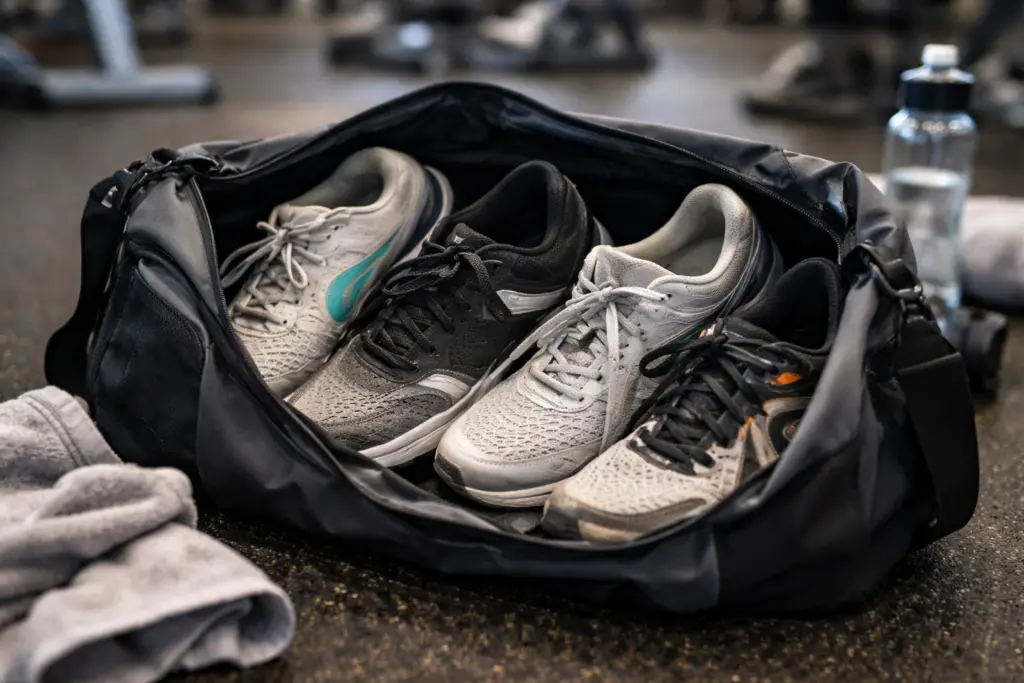
Beginner-Friendly HYROX Shoe Profile
Instead of chasing brands, look for :
- Hybrid training shoes with runnable cushioning
- Slightly firmer midsoles for sled work
- Durable outsole rubber
If you can comfortably run the full race distance and feel stable on stations, the shoe works.
HYROX Clothing: Simple, Breathable, Reliable
Tops
- Lightweight t-shirt or singlet
- Breathable fabric
- No thick seams
Bottoms
- Shorts with stretch
- Secure waistband
- No bouncing pockets
Compression is optional. Comfort is not.

Small Gear That Makes a Big Difference
Socks & Underwear
- Mid-length socks (avoid ankle socks)
- Tested underwear only
- No cotton fabrics
Small mistakes here cause blisters, chafing, and distraction.
Optional HYROX Gear (Use With Purpose)
Grips
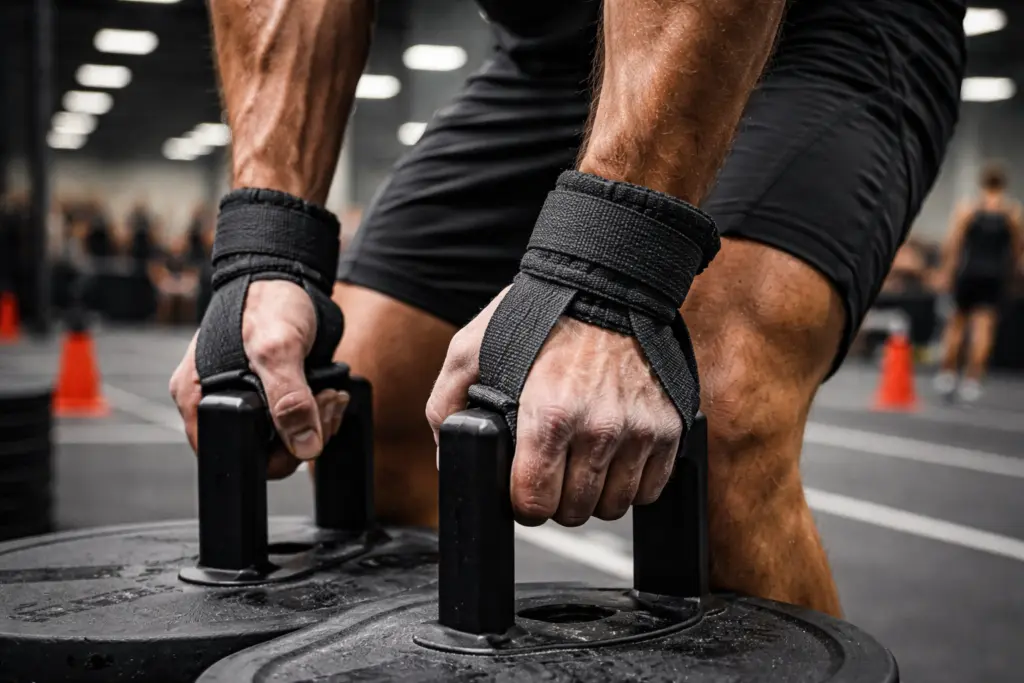
Helpful if :
- You struggle with sweaty hands
- You want extra confidence on carries
Not mandatory.
Belts & Sleeves
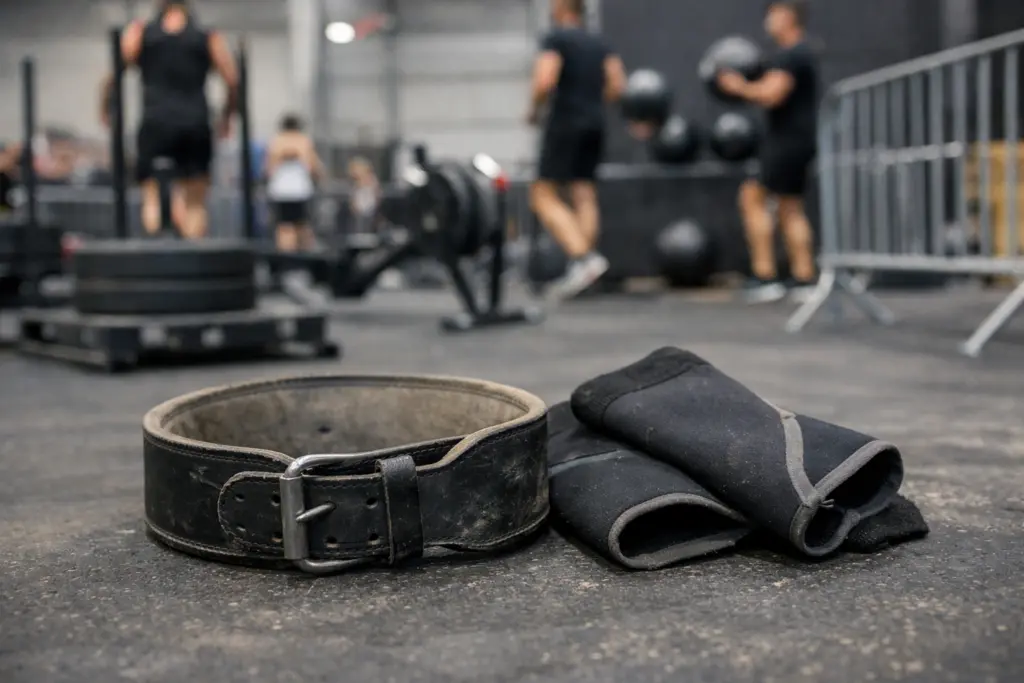
Only useful if :
- You already train with them
- They don’t affect running
Not recommended for first-time racers.
Gear You Do NOT Need for Your First HYROX
- Weight vests
- Tactical gloves
- New gear bought “just for race day”
- Anything untested
HYROX rewards preparation, not equipment overload.
Training Gear vs Race Day Gear
Training
- Comfortable
- Durable
- Forgiving
Race Day
- Tested
- Minimal
- Familiar
Never race in gear you haven’t trained in.
Beginner HYROX Gear Checklist
- Hybrid training shoes
- Breathable top
- Comfortable shorts
- Reliable socks
- Optional grips
That’s it.
Official HYROX Gear Rules (External Link)
According to official HYROX gear rules, all equipment must be race-legal and tested beforehand.
Final Advice: Gear Supports Training, Not the Other Way Around
Your HYROX performance improves far more from :
- Consistent training
- Smart pacing
- Smooth transitions
than from any piece of equipment.
If you’re unsure where to start :
- Read the HYROX Beginner Guide
- Follow the HYROX Training Plan
- Keep your gear simple
HYROX Gear for Training vs Race Day : What Actually Matters
Many beginners overthink HYROX gear and assume race day equipment must be very different from training gear. In reality, the best approach is to train with gear that closely matches what you will use on race day.
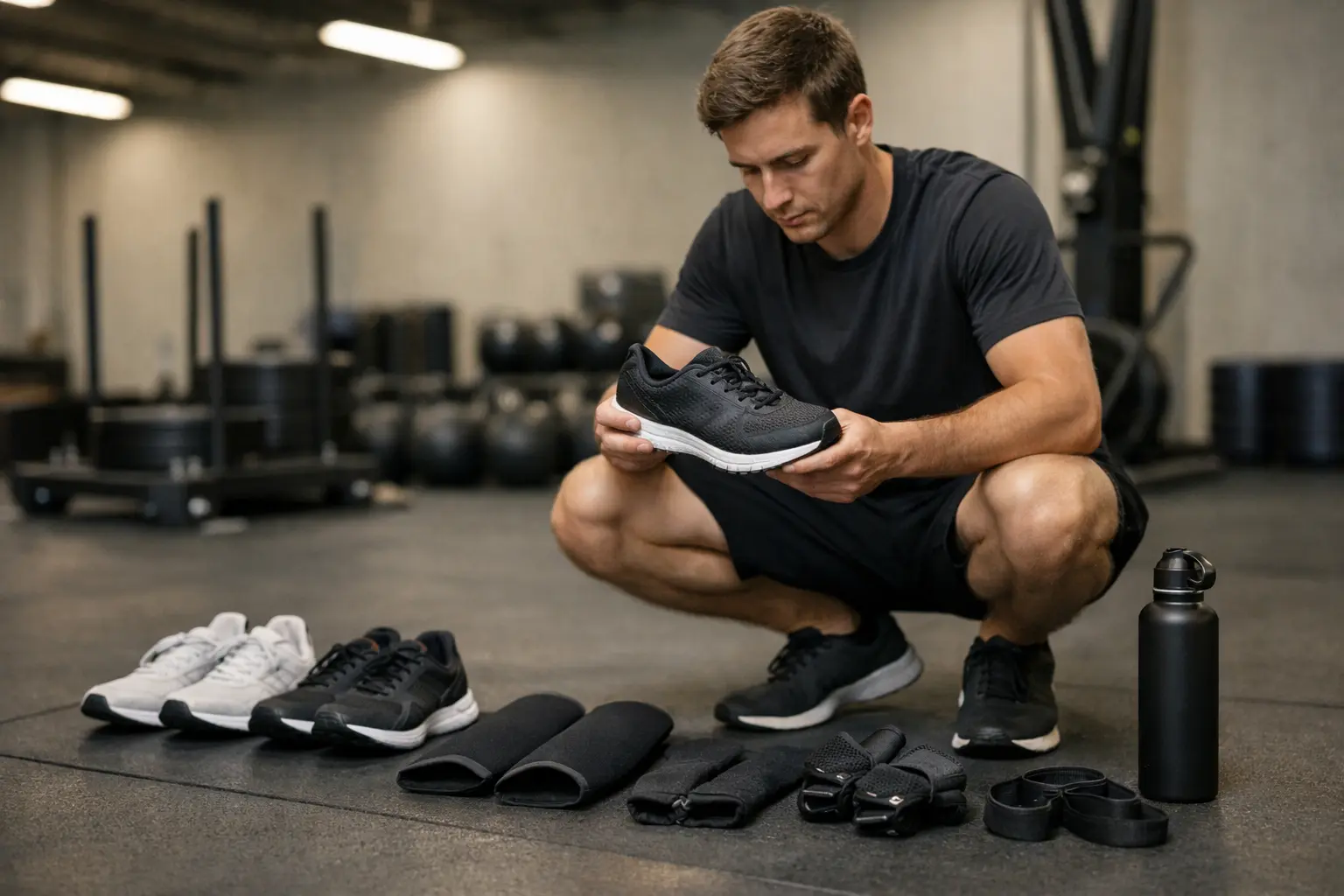
Shoes should already be broken in and tested during longer sessions. Knee sleeves, grips, or straps should only be used in training if you plan to rely on them during the race. Introducing new equipment on race day often leads to discomfort, inefficiency, or wasted energy.
For training, comfort and repeatability matter more than optimization. For race day, simplicity and familiarity are key. If a piece of gear does not clearly improve confidence, movement efficiency, or fatigue management, it is usually unnecessary.
HYROX rewards preparation, not gear complexity.
HYROX Gear FAQ
What gear do I really need to start HYROX?
Very little. A good pair of running shoes, breathable training clothes, and basic grip protection (gloves or tape) are enough to begin. Don’t over-optimize early.
Do I need specific HYROX shoes?
No “official” HYROX shoes exist. You need hybrid shoes: stable enough for sleds and lunges, but light and responsive for running. Road-only shoes are usually a mistake.
Are gloves mandatory for HYROX?
Not mandatory, but highly recommended. Farmers carry, sled push/pull, and wall balls destroy hands. Gloves or grips reduce fatigue and skin damage, especially for beginners.
Is a weightlifting belt useful in HYROX?
For most athletes: no. HYROX loads are moderate and repetitive. A belt can limit breathing and running comfort. Only useful for heavier divisions and experienced athletes.
When should I upgrade my gear?
After 2–3 months of consistent training. Once you know your weaknesses (grip, stability, heat, chafing), gear upgrades actually make sense.